


Ask ten marketers what a lead costs and you will get ten different numbers, which tells you the question itself is wrong. There is no single cost per lead in Australia, because the right figure depends entirely on your business: what a job is worth to you, how often you close one, and which channel the lead came from. A lead that costs one business far too much is a bargain for another. The more useful question is not what a lead costs but what one is worth to you, because that is what tells you how much you can sensibly afford to pay. This article shows you how to work that out, how the main channels compare, the hidden costs most businesses miss, and how to tell whether your current cost per lead is actually a problem.
There is no single cost per lead in Australia, because the figure depends on your average job value, your close rate and the channel. The useful question is not what a lead costs but what one is worth to you: your average job value multiplied by your close rate gives the ceiling you can afford to pay.
Why a single cost-per-lead figure is misleading
Before chasing a benchmark number, it is worth understanding why benchmark numbers are close to useless for this, because the cost of a lead swings enormously depending on factors specific to your business.
Industry is the biggest. A lead for a high-value service like a kitchen renovation behaves nothing like a lead for a low-value one, because the economics underneath them are completely different.
Job value follows from that: a business where each job is worth a great deal can afford to pay far more for a lead than one where each job is small, so the same dollar cost per lead is cheap for one and ruinous for the other.
Competition shifts it too. In a crowded market where many businesses are bidding for the same attention, leads cost more than in a quiet one, simply because demand for them is higher.
Channel changes everything, as a lead from paid advertising behaves differently in cost from one that comes through SEO or a referral, which the comparison below covers.
And season moves it, since demand for many services rises and falls through the year, and costs tend to track that.
Put all of that together and you can see why a cost-per-lead benchmark you read somewhere rarely transfers to your business. A figure quoted for a different industry, a different job value, a different market and a different channel is describing someone else’s situation, not yours. Rather than hunting for a number to compare against, the productive approach is to work out what a lead is actually worth to you, which gives you a figure that is genuinely yours.
Work out what a lead is worth to your business
This is the calculation that matters, and it is simple enough to do on the back of an envelope. The idea is to work out the most you can afford to pay for a lead, based on what a lead actually earns you, and it comes down to two numbers about your own business.
The first is your average job value, how much a typical job or sale is worth to you in revenue. The second is your close rate, the proportion of leads you actually convert into paying customers. If you win one job for every four genuine enquiries, your close rate is one in four.
Multiply your average job value by your close rate, and you get the average revenue each lead produces. That figure is the ceiling: the maximum you could pay for a lead and still break even, before accounting for your costs and the margin you want to make.
Here is a worked example with clearly hypothetical round numbers, purely to show the method, not figures for any real business:
- Say your average job value is $2,000.
- Say your close rate is one in four, or 25 per cent.
- Each lead is therefore worth, on average, $2,000 multiplied by 0.25, which is $500.
So in this example, a lead is worth $500 in revenue on average. That $500 is your break-even ceiling: pay more than that per lead and you lose money; pay less and there is room for your costs and your profit. If you wanted a healthy margin, you might set your maximum acceptable cost per lead well below that ceiling, perhaps $150 or $200, so that every lead comfortably pays for itself and leaves profit behind.
The power of this is that it turns an unanswerable question (“what should a lead cost?”) into an answerable one (“what can I afford to pay, given what a lead earns me?”). Run your own real numbers through it and you have a figure to judge every channel and campaign against, one that is specific to your business rather than borrowed from someone else’s.
How the main channels differ
Once you know what you can afford to pay, the next question is where leads come from, and the three main sources behave quite differently on speed, cost over time and control.
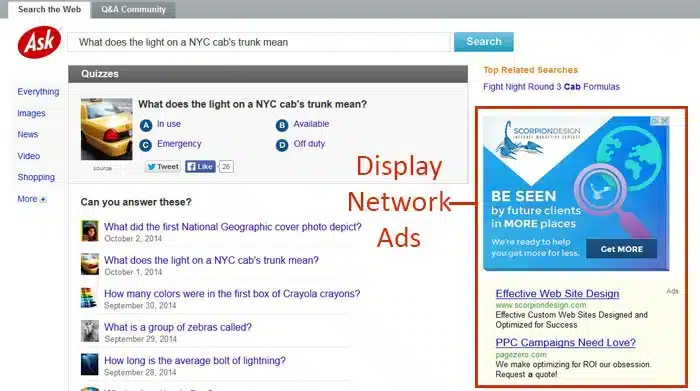
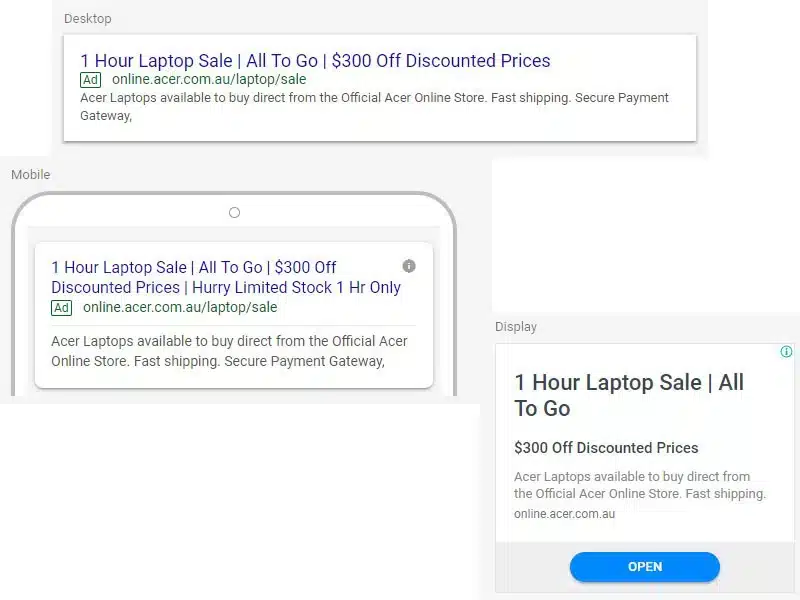
Paid search means advertising, such as Google Ads, where you pay to appear when someone searches. Its defining feature is speed: you can switch it on and start getting leads almost immediately, which makes it the fastest way to generate enquiries. The trade-off is that the cost is ongoing: you pay for every click for as long as the ads run, and the leads stop the moment you stop paying. You also have a lot of control, able to adjust targeting and budget quickly. Well-run Google Ads management is what keeps that cost-efficient rather than wasteful.
SEO is the work of ranking in the organic (unpaid) search results. It is the opposite of paid in its cost behaviour: it is slower to produce results, because rankings build over time rather than switching on, but it compounds. The work you do keeps producing leads without paying per click, so the cost per lead tends to fall over time as the rankings strengthen and the traffic grows. It is an investment that builds an asset rather than renting attention.
Referral is leads that come from word of mouth and recommendations. These are often the highest-quality and lowest-direct-cost leads, because they arrive pre-trusted, but they are the hardest to control and scale, since you cannot simply turn up the volume the way you can with paid or build it deliberately the way you can with SEO.
The honest summary is that paid is faster and SEO compounds. Paid search buys you leads now at an ongoing cost, SEO builds a source that gets cheaper per lead over time, and referral is excellent but hard to control. Most businesses end up using a mix, weighted towards whichever suits their timeframe and budget.
The hidden costs most businesses miss
The dollar figure you pay a channel is only part of what a lead actually costs you, and the hidden costs are where businesses quietly lose money without realising it.
Unqualified leads are the first. Not every enquiry is a real prospect; some are people who were never going to buy, are outside your area, or want something you do not offer. You pay for these leads the same as the good ones, so a channel that produces lots of cheap but unqualified leads can be more expensive in reality than one producing fewer, better ones.
Follow-up time is a cost people rarely count. Every lead takes someone’s time to respond to, qualify and pursue, and that time has a real value. A high volume of leads that each need chasing can cost more in staff time than the leads themselves cost to generate.
Slow response quietly destroys value. A lead that is not contacted quickly goes cold, because the prospect moves on or contacts a competitor who responded faster. A lead you paid for but answered too late is often money wasted, so the speed of your follow-up directly affects what your leads are really worth.
And the worst one, leads that never get called at all. It happens more than businesses admit: enquiries that come in and simply fall through the cracks, never followed up, because of a busy period, a missed notification or no clear process. Every one of those is a lead paid for and thrown away. Before worrying about the cost per lead, it is worth checking that every lead you already generate is actually being contacted, because fixing that is free and often more valuable than any new campaign.
How to tell whether your current cost per lead is actually a problem
If you are already generating leads and wondering whether you are paying too much, there is a simple diagnostic, and it is the one most businesses get wrong. The mistake is to judge a channel by how many leads it produces, or by the cost per lead alone. The right measure is to track through to closed revenue.
Here is the difference. Judging by lead volume tells you a channel is producing lots of enquiries, but says nothing about whether those enquiries turn into paying customers. A channel that floods you with cheap leads looks great on a cost-per-lead basis and can still be losing you money if almost none of them close. Judging by closed revenue tells you what actually matters: how much real business each channel brings in against what it costs.
So the practical step is to track each lead source all the way through to the revenue it produces, not just the leads it delivers. For each channel, look at what you spent and what closed business came out of it. A channel with a high cost per lead that produces well-qualified leads which close often can be far more profitable than a cheap one that produces leads that never convert.
That reframes the whole question. Your cost per lead is only a problem if, once you follow it through to closed revenue, the channel is not paying for itself. A “high” cost per lead that returns strong closed revenue is not a problem at all, and a “low” one that returns nothing is. Track to revenue, and you will know which of your channels to back and which to cut.
Working out what you can afford
The useful way to think about lead generation cost is to stop looking for a benchmark and start with your own numbers: multiply your average job value by your close rate to find what a lead is worth, set a maximum you are willing to pay below that, choose channels for your timeframe and budget, make sure every lead actually gets followed up, and judge each source by the closed revenue it produces rather than the leads it delivers. Do that, and the cost of a lead stops being a mystery and becomes a figure you control. If you would like help generating leads that are worth what you pay for them, our lead generation services are built around exactly that: leads that turn into closed business, not just enquiries in a dashboard.