

Running one location is straightforward; ranking well across several is a different challenge entirely, and it’s where a lot of multi-location businesses either overreach or give up. Done properly, local SEO can make each of your locations visible to the customers right around it. This guide from Nifty Marketing Australia is a practical playbook for multi-location businesses in Australia: how to build location pages that actually rank, manage multiple Google Business Profiles, and keep everything consistent as you scale. Our local SEO services do exactly this for businesses with more than one address.
| Quick answerLocal SEO for a multi-location business works by giving each location its own genuinely useful presence: a unique, detailed location page, its own well-managed Google Business Profile, consistent business details across the web, and its own reviews. The businesses that win treat each location as its own local entity, not a copy-paste of head office. |
How multi-location local SEO actually works
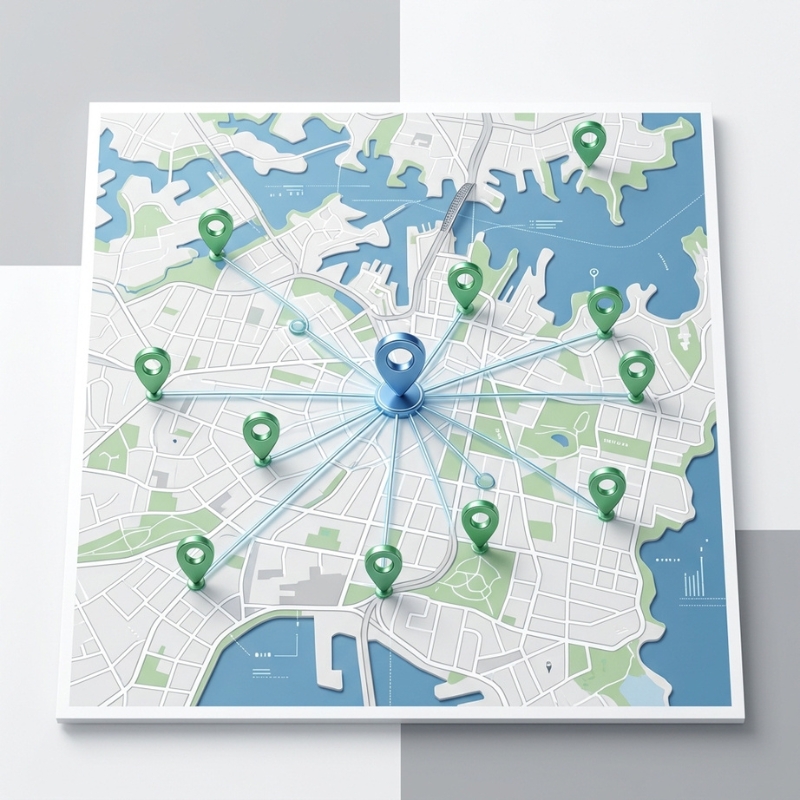
The core idea behind multi-location local SEO is simple: search engines want to show people the most relevant nearby option, so your job is to make each of your locations clearly relevant to its own local area. That relevance is built from a few connected pieces working together. First is a dedicated location page on your website for each site, so there’s a genuine, specific page for search engines to rank and for customers to land on. Second is a separate Google Business Profile for each location, which is what puts that site into the local map and “near me” results for its area. Third are citations, which are consistent mentions of each location’s name, address and phone number across the web, reinforcing that the location is real and where it says it is. Fourth are reviews for each location, which build trust and local ranking signals site by site. The key mental shift is to stop thinking of your business as one entity with several addresses, and start treating each location as its own local business that happens to share a brand. When each location has its own proper page, profile, citations and reviews, each can rank in its own area, rather than head office ranking everywhere and the branches nowhere.
Building location pages that aren’t thin
Location pages are where most multi-location businesses go wrong, and it’s worth being blunt about why: the lazy approach of creating near-identical pages with only the suburb name swapped in produces thin, duplicate content that search engines see straight through and rarely reward. A location page earns its ranking by being genuinely useful and specific to that place. That means real, unique detail: the actual address and local contact details, the services offered at that location, the areas and suburbs it serves, parking or access information, the team or manager there if relevant, and content that reflects that specific community rather than generic filler. Local proof helps too, reviews from customers in that area, photos of the actual location, and anything that shows a real presence rather than a virtual pin on a map. Internal links from your main pages and between relevant pages help search engines understand the structure. The test is simple: would this page be useful to a customer in that specific area, or is it obviously a template? If it’s the latter, it won’t rank, and it may even drag down the rest. Genuinely local, genuinely useful pages are the ones that win, which takes more effort per location but is the only approach that actually works. Our SEO services build location pages to this standard rather than churning out duplicates.
Managing multiple Google Business Profiles
For a multi-location business, Google Business Profiles are often the single biggest driver of local visibility, and managing several of them well is essential. The foundation is having a separate, properly verified profile for each genuine location, since each one is what can appear in the local results for its own area. Every profile needs to be complete and accurate: the correct business name, the exact address, the local phone number, opening hours, and the right categories describing what that location does. Consistency is critical, because the details on each profile should match what’s on that location’s page and across the web, so search engines trust that the information is reliable. Beyond the basics, active profiles perform better, so keeping them updated, adding photos of each location, posting updates, and responding to reviews all help. It’s also important to follow the rules: profiles should represent real locations with a genuine presence, not fabricated addresses, because getting this wrong risks your listings. As you add locations, this becomes a management task in its own right, keeping details current across many profiles, handling reviews for each, and ensuring nothing drifts out of sync.
Citations and NAP consistency at scale
Citations, which are online mentions of your business details, matter for local SEO because they help confirm to search engines that each location is real and located where it claims to be. The critical principle is NAP consistency, meaning your Name, Address and Phone number should be identical everywhere they appear online for each location. When your details are consistent across your website, your Google Business Profiles, directories and other listings, search engines can confidently connect them and trust the information. When they’re inconsistent, a slightly different address format here, an old phone number there, a name variation somewhere else, it creates confusion that can undermine your local rankings. For a single location this is manageable; across many locations it becomes a genuine discipline, because every location has its own set of details that must stay consistent everywhere, and the more locations and listings you have, the more places an inconsistency can creep in. The practical approach is to define each location’s details exactly once, in a single source of truth, and make sure every listing matches it precisely, then keep them aligned whenever anything changes, such as a location moving or a number updating.
Reviews per location
Reviews are powerful for local SEO and for winning customers, and the key point for a multi-location business is that they need to be earned location by location, not just for the brand overall. Each of your Google Business Profiles has its own reviews, and those reviews influence both how much a nearby customer trusts that location and how well it ranks in its local area. The practical approach is to make it easy and routine for happy customers at every location to leave an honest review, and to respond to reviews thoughtfully, which shows you’re engaged and helps build trust. It’s important that reviews are genuine and earned rather than fabricated, both because authenticity is what customers respond to and because fake reviews carry real risks. Spreading review-building across all your locations, rather than letting one strong location carry the brand while others sit empty, ensures each site can compete in its own area.
Frequently asked questions
How does local SEO work for a business with multiple locations?
Each location needs its own local presence: a unique, detailed location page, its own Google Business Profile, consistent business details across the web, and its own reviews. Treating each site as its own local entity, rather than head office with several addresses, is what lets each one rank in its own area and win nearby customers.
Do I need a separate page for each location?
Yes, ideally a genuinely useful page for each location, with real, unique detail about that site, its services, the areas it serves and local proof. What to avoid is near-identical pages with only the suburb name swapped, which are thin, duplicate content that search engines rarely reward and can even hold you back.
How many Google Business Profiles can I have?
You can have a separate profile for each genuine, verified location your business operates, and each one should be complete, accurate and consistent. The important rule is that profiles must represent real locations with a genuine presence, not fabricated addresses, because getting that wrong puts your listings at risk. Manage each profile actively for best results.
What makes a location page rank (and not look thin)?
Genuine, specific usefulness. Include the real local address and contact details, the services offered there, the areas served, local proof like reviews and photos, and content relevant to that community, not generic filler. The test is whether the page would genuinely help a customer in that area, or whether it’s obviously a swapped-name template.
Final thoughts
Winning local SEO across multiple locations comes down to treating each site as its own local business: a genuinely useful location page, a well-managed Google Business Profile, consistent details everywhere, and reviews earned location by location. The trap to avoid is thin, copy-paste pages that search engines see straight through. Do it properly and each location can dominate its own area rather than head office ranking nowhere in particular. For a local strategy built to scale across your locations, get a proposal from Nifty Marketing Australia.
| Get a proposalStruggling to rank across several locations? Get a multi-location local SEO proposal from Nifty Marketing Australia and make each site visible in its own area. |