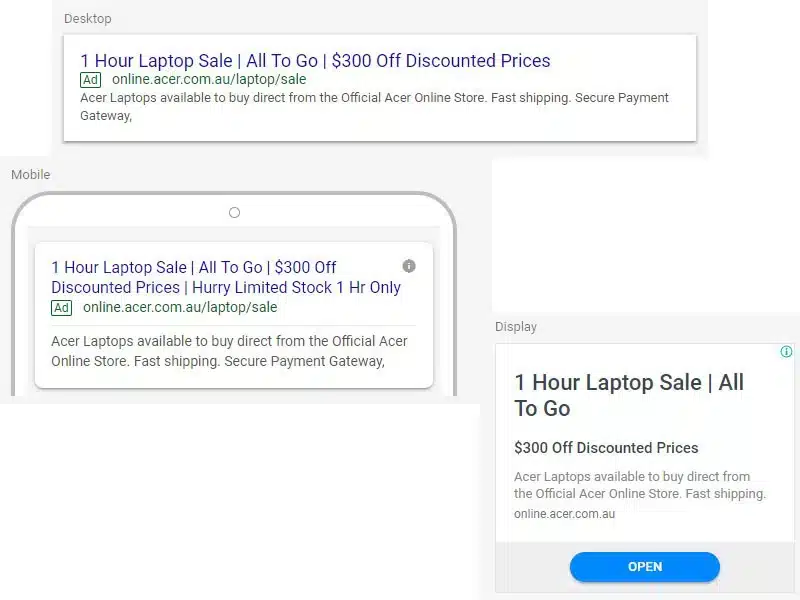



If you’re choosing between SEO and Google Ads, you’re not really choosing between “free traffic” and “paid traffic”.
You’re choosing between:
• a compounding asset that can keep producing leads after the work is done (SEO), and
• a controllable tap that can be turned on (and off) instantly (Google Ads).
Most blogs stop there. But if your real goal is better-quality leads long-term, you need a decision framework that accounts for lead quality, sales cycle, margins, capacity, competition, and measurement.
Let’s do this properly.
The quick answer (AEO-ready)
For better leads long-term, SEO usually wins because it builds trust, captures demand across more stages of the customer journey, and compounds over time. Competitors commonly position SEO as the “long-term play” for sustainable results.
Google Ads wins when you need leads now (new service, empty pipeline, seasonal surge), or when you want precision targeting and fast testing.
The best long-term outcome for many Australian businesses is a smart split:
• use Google Ads to generate demand and validate offers quickly,
• build SEO so you’re not renting your leads forever, and
• use both channels together in a way that avoids paying twice.
What “better leads” actually means (the part most people skip)
Before you choose a channel, define what “better leads” means for your business. Because more enquiries isn’t automatically better. Better leads are the ones that:
• match your ideal customer profile
• have clear intent and urgency
• can afford your solution
• convert into paying customers at a healthy margin
• stick around long enough to be profitable (LTV)
• don’t drain your team with tyre-kickers
A simple lead-quality scorecard you can use
Score each lead source (SEO vs Ads) from 1–5 on:
• Intent fit (are they searching for exactly what you sell?)
• Close rate (what % becomes customers?)
• Cost to acquire (true CAC, not just CPL)
• Time to close (days/weeks to convert)
• Customer value (LTV or average job value)
• Refund/cancellation rate (quality and satisfaction signal)
If you measure like this, you’ll often find:
• Ads can create higher immediate volume, but quality can swing wildly with targeting and landing pages.
• SEO can produce higher trust-driven leads over time, especially for considered purchases.
How SEO generates better leads over the long haul
SEO is not “writing a few blogs”. It’s building visibility and authority for the searches your customers make across the whole journey:
• early research (“best X”, “how much does Y cost”)
• comparison (“X vs Y”, “top providers”)
• decision (“near me”, “pricing”, “book consult”)
Competitors consistently describe SEO as an investment that keeps producing traffic and leads without paying per click.
Why SEO leads often improve in quality over time
Because SEO tends to reward:
• depth (answering the real questions)
• credibility (evidence, case studies, experience)
• relevance (serving a specific intent)
• strong pages (fast, clear, easy to act on)
As your content and service pages mature, you usually capture a bigger mix of:
• high-intent “ready to buy” queries, and
• mid-intent queries that convert after a few visits (assisted conversions).
When SEO is the better long-term bet
SEO tends to outperform over 6–18 months when:
• you have a service customers research (B2B, professional services, high-value trades, health, finance-adjacent)
• your margins support investing in content + authority
• you want to reduce reliance on rising ad costs
• you want brand trust to do some of the selling for you
• your business has the capacity to fulfil steady lead volume (not just bursts)
If you want support building an SEO engine that compounds, explore Nifty’s professional SEO services in Australia.
Common SEO pitfalls that wreck “long-term leads”
SEO fails when businesses:
• publish generic content that doesn’t match real intent
• ignore the money pages (service pages that should convert)
• don’t build topical authority (everything is disconnected)
• underinvest for too long, then declare it “doesn’t work”
• don’t track lead quality (only traffic)
How Google Ads generates leads (and why quality can be hit-or-miss)
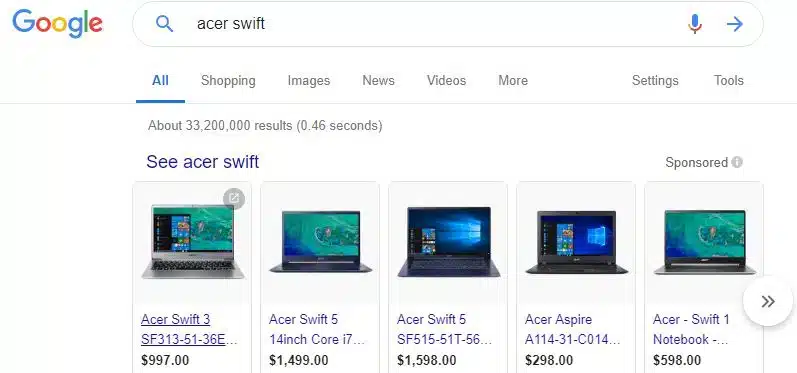
Google Ads is brilliant because it’s immediate and controllable:
• you can choose keywords, locations, times, and devices
• you can test offers and landing pages quickly
• you can scale what works
Competitors often position Ads as faster, with outcomes depending on goals, budget, and timeline.
When Google Ads is the right move
Google Ads is usually the better choice when:
• you need leads this month (new location, new service, empty pipeline)
• you’re seasonal (e.g., EOFY services, summer trade spikes, event-driven industries)
• your offer is clear, and high-intent keywords exist
• you can handle quick lead flow (phones answered, follow-up tight)
• you want fast market feedback (what messaging converts)
Why Ads lead quality drops (even with “good” clicks)
Ads don’t automatically mean good leads. Quality drops when:
• targeting is too broad (wrong match types, loose negatives)
• landing pages are generic or slow
• tracking is broken, so the algorithm optimises for the wrong thing
• the offer is weak (no clear differentiator, no proof, no urgency)
• sales follow-up is slow (leads go cold quickly)
In other words: Google Ads doesn’t just buy leads. It buys opportunities, and your funnel decides whether those opportunities become customers.
The 6–18 month decision framework (choose SEO, Ads, or a split)
Use these four decision drivers. Answer honestly.
1) Time pressure (pipeline reality)
If you need leads in the next 2–4 weeks:
• favour Ads first (with conversion tracking and a strong landing page)
• begin SEO in parallel, so you’re not permanently dependent
If you can wait 3–6 months for momentum:
• invest more heavily in SEO foundations and content that targets decision-stage intent
2) Margins and cost tolerance
If your gross margin per sale is tight:
• SEO often becomes the long-term winner because it reduces the ongoing cost per acquisition
If margins are strong:
• Ads can scale profitably while SEO is built as a second engine
3) Sales cycle (fast vs considered)
If customers buy fast (simple service, clear need, urgent):
• Ads can be a strong first lever
If customers research (B2B, high-value services, “trust needed” industries):
• SEO usually drives better lead quality long-term because it builds confidence before the first enquiry
4) Competition and differentiation
In highly competitive spaces, Ads costs can rise quickly. SEO also becomes harder but the payoff can be bigger if you:
• specialise (niche landing pages and content clusters)
• demonstrate proof (case studies, comparisons, outcomes)
• answer the questions competitors avoid (pricing, process, “who it’s for”)
If you want a strategy designed specifically around long-run lead quality, you can learn more about SEO strategies for long-term leads.
The “smart split” strategy (how to use both without wasting money)
Most advice says “use both.” The real question is how.
Here’s a split that works for many Australian SMEs.
Use Ads for immediate high-intent capture
Target:
• “buy now / book now / quote” terms
• competitor comparison terms (where appropriate)
• high-intent suburb/city + service queries (Sydney, Melbourne, Brisbane, Perth, Adelaide)
Focus on:
• one offer per landing page
• proof above the fold (reviews, credentials, outcomes)
• frictionless conversion (call + form + clear next step)
Use SEO to cover the entire journey (and improve conversion rates)
Build:
• service pages that convert
• comparison content (“X vs Y”)
• problem/solution content (“why is this happening?”, “how to choose”)
• FAQs that match how Aussies actually search
Then connect it all internally so authority flows to your money pages.
Avoid paying twice (the overlap problem)
This is where many businesses run out of money.
Do this:
• let SEO win your branded searches where possible (protect with Ads only when needed)
• use Ads for terms you don’t yet rank for, or where you want guaranteed top-of-page presence
• mine Ads search terms for SEO opportunities (the phrases that actually convert)
• use remarketing to bring back SEO visitors who didn’t enquire
The goal is a system where:
• Ads validate and accelerate, and
• SEO reduces long-term dependency and improves lead quality.
For a structured approach that connects content, technical SEO, and conversion, consider comprehensive SEO solutions for sustainable growth.
How to compare SEO vs Ads fairly (measurement that actually reflects lead quality)
If you compare “SEO traffic” to “Ads leads”, you’ll make the wrong decision. You need a shared measurement model.
Tracking essentials (non-negotiables)
• conversion tracking that reflects real outcomes (calls, forms, bookings)
• call tracking if phone enquiries matter
• a CRM or at least lead tagging (source + campaign + close outcome)
• consistent definitions: lead, MQL, SQL, customer
Metrics that matter more than clicks
• Cost per qualified lead (CPQL)
• Cost per acquisition (CPA)
• Close rate by channel
• Time to close
• Customer lifetime value (LTV)
• Return on ad spend (for Ads) and return on investment (for SEO) over time
If you can, set up a monthly “lead quality review”:
• Which leads are closed?
• Which didn’t and why?
• What patterns show up (location, keyword theme, landing page, content topic)?
That’s how you shift from “marketing activity” to “marketing that produces better leads”.
Australia-specific marketing considerations (don’t skip this)
When you’re promoting services online, whether through Ads or SEO content, make sure your claims are accurate, and your marketing is compliant with Australian rules and expectations.
A practical starting point is the Australian Government’s guidance on marketing and advertising, which covers marketing fundamentals and obligations for businesses.
This matters because:
• Ads tempt businesses into bold claims to lift conversion rate
• SEO content can drift into “guarantees” and overpromises
• credibility (and trust) is central to long-term lead quality
FAQs
Is SEO or Google Ads better for leads?
If you need leads quickly, Google Ads is usually better in the short term. If you want a channel that improves lead quality and reduces reliance on paid spend over time, SEO is usually better long-term. Many Australian businesses benefit from a staged approach: Ads first for immediate demand, SEO for compounding growth.
How long does SEO take to generate leads?
It depends on your competition, website quality, and content strategy. In general, businesses often see early movement in a few months, with stronger, more consistent lead flow building over 6–12+ months as authority and visibility grow. (Treat anyone promising instant SEO wins with caution.)
Are Google Ads leads lower quality than SEO leads?
Not always. Ads can produce excellent leads when targeting, landing pages, tracking, and follow-up are tight. But Ads lead quality can drop quickly if campaigns are broad or your offer and funnel aren’t aligned.
Should I stop Google Ads once SEO starts working?
Usually, you refine not stop. As SEO strengthens, you can:
• shift Ads spend to your most profitable services
• focus Ads on highly competitive terms where organic ranking is hard
• invest in remarketing and offer testing
• reduce reliance on “always-on” spend for terms SEO now owns
What’s the best split between SEO and Google Ads?
A common, sensible starting point:
• if you need leads now: 70% Ads / 30% SEO
• if you have a stable pipeline: 50% Ads / 50% SEO
• if you want long-term independence: 30% Ads / 70% SEO
The “right” split depends on margins, urgency, competition, and capacity.
Next steps checklist (use this before you spend another dollar)
• Define “better leads” for your business (close rate, LTV, refund rate)
• Decide your timeframe (need leads now vs build the asset)
• Fix tracking so Ads and SEO are measured the same way
• Build landing pages that convert (clear offer, proof, fast load)
• Use Ads insights to guide SEO topics that actually convert
• Build SEO content clusters around your money services
• Review lead quality monthly and optimise based on outcomes