

If you’ve ever celebrated a page hitting position one on Google… and then wondered why enquiries didn’t spike, you’ve already felt the difference between ranking and being chosen.
Ranking is where you appear.
Being chosen is whether people trust you enough to click, engage, and take the next step.
In 2026-style search results (with AI answers, richer SERPs, and more “zero-click” behaviour), this gap is bigger than ever. Australian businesses that win aren’t just optimising to show up — they’re optimising to be the obvious choice.
This guide breaks down:
- What “ranking” really means (and what it doesn’t)
- What “being chosen” looks like in real search behaviour
- The practical levers that increase clicks, qualified traffic and conversions
- How to measure success beyond vanity rankings
Quick Definitions You Can Use in a Team Meeting
What does “ranking” mean?
Ranking is your position on a search engine results page (SERP) for a given query. It’s an outcome of relevance, quality, authority, and usability signals — plus competition.
Ranking answers:
- “Did Google include me in the shortlist?”
- “Where do I sit compared to others?”
What does “being chosen” mean?
Being chosen is the moment a real person (or an AI system) decides your result is the best next action.
Being chosen answers:
- “Do I look like the safest, clearest, most credible option?”
- “Will this page actually solve what I need?”
- “Is this business legit, experienced, and a good fit?”
Ranking gets you seen. Being chosen gets you paid.
Why Ranking Isn’t Enough Anymore
A decade ago, ranking improvements often created a fairly direct lift in traffic. Today, even strong rankings can produce underwhelming results because the SERP itself has changed.
Here’s what’s happening in plain English:
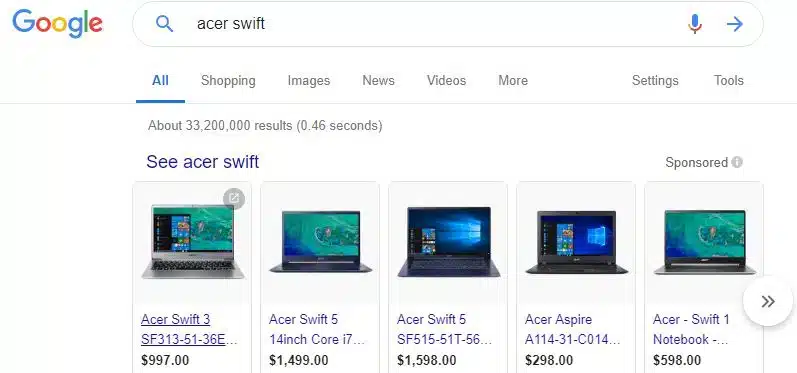
- Google shows more answers (snippets, maps, “people also ask”, shopping panels, AI summaries), so fewer people need to click.
- Users scan faster and judge harder. They’re not reading your page yet — they’re judging your preview.
- Trust is assessed before the click (brand familiarity, reviews, credibility signals, and how confidently you speak to the problem).
So if your strategy is “get to page one and the leads will come”, you can end up with:
- A rank that looks great in reports
- Traffic that stays flat
- Enquiries that don’t move
- A team that’s confused about what “SEO success” even means
The Three-Layer Model: Visibility → Preference → Action
To bridge the gap, think of search performance in three layers:
1) Visibility (Ranking)
You earn a seat on the SERP.
What influences it:
- Technical health (crawlability, speed, mobile usability)
- On-page relevance (intent match, topic coverage)
- Authority (links, mentions, topical strength)
2) Preference (Being Chosen)
You win the click (or the AI citation, or the “next step” action).
What influences it:
- Snippet clarity and relevance (title/meta that actually answers the query)
- Trust cues (reviews, awards, years of experience, proof)
- Differentiation (why you vs everyone else)
- Brand signals (recognition, consistency, reputation)
3) Action (Conversion)
You turn attention into enquiries, calls, bookings, purchases.
What influences it:
- Page experience (speed, UX, readability)
- Offer clarity (what happens next, how to engage)
- Proof stack (case studies, outcomes, process, FAQs)
- Friction removal (forms, phone, pricing guidance, next steps)
A strong SEO strategy addresses all three — not just visibility.
What Actually Makes People Choose One Result Over Another?
Below are the most common “chosen” triggers we see in Australian search behaviour. These happen in seconds — often before someone even scrolls.
The result matches the intent immediately
If someone searches “SEO agency Australia”, they’re not looking for a definition of SEO. They’re looking for a provider, proof, and a path to engage.
To be chosen, your snippet needs to reflect:
- Clear service fit
- Clear audience fit (e.g., SMEs, ecommerce, enterprise, local)
- Clear value or differentiator
The snippet reduces uncertainty
Choosing a provider is a risk decision. People want to know:
- “Are these people credible?”
- “Will this work for my industry?”
- “Do they understand Australia and my market?”
- “Am I going to waste money?”
Strong “chosen” snippets reduce uncertainty with confidence and specificity (without sounding salesy).
You look like the authority, not just an option
Authority isn’t just links. It’s how you communicate expertise and trust signals.
Examples of authority signals users respond to:
- Specific outcomes (“grew qualified leads by X%”)
- Named specialisations (technical SEO, ecommerce SEO, multi-location SEO)
- Recognisable brands (clients, partners, platforms)
- Independent proof (reviews, awards, industry mentions)
You make the next step easy
If your result feels like a dead end, users keep scanning.
Being chosen often comes down to whether the result feels like:
- “This will answer me quickly” (for informational intent)
- “This will solve my problem” (for commercial intent)
- “This is easy to engage” (for service intent)
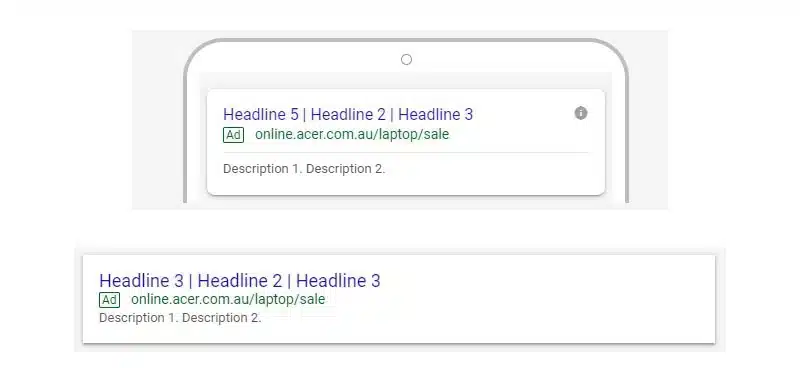
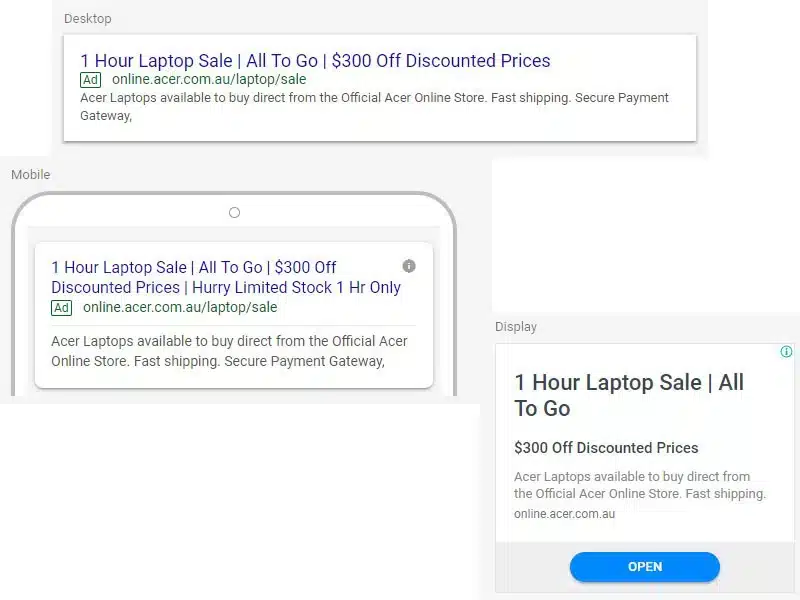
The “Pre-Click” Optimisation Checklist (How to Win the Click)
This is where most SEO campaigns under-invest. The fastest gains often come from improving how your result presents on the SERP.
1) Rewrite titles for humans first
Your title isn’t a place to cram keywords. It’s a promise.
Strong titles often include:
- The intent (“SEO Services in Australia”)
- The outcome (“Increase Qualified Leads”)
- The trust hook (“Strategy-led, Transparent Reporting”)
- A differentiator (“Specialists in Technical + Content SEO”)
Keep it natural. If it reads like a robot, it’ll perform like one.
2) Write meta descriptions that sell clarity, not hype
Meta descriptions don’t always show, but when they do, they influence the click.
Aim for:
- Who it’s for
- What you do
- What makes you different
- A clear next step
3) Add “proof hooks” that can appear in snippets
Google may pull data into rich results. You can support this by having:
- Clear service descriptions
- FAQ sections that answer real questions
- Review signals and testimonials on relevant pages
- Local relevance where appropriate (Australia-wide, states, or key cities)
4) Be consistent across the web
People check quickly. If your brand presence is inconsistent, trust drops.
Consistency areas:
- Business name, messaging, and positioning
- Social profiles and business listings
- Reviews and reputation signals
- On-site claims backed by evidence
The “On-Page” Choice Factors (How to Win After the Click)
Even if you win the click, you still need to be chosen again — this time to continue, enquire, or buy.
Above-the-fold clarity
Within the first screen, users should know:
- What you offer
- Who it’s for
- What results you drive
- What the next step is
If someone in Sydney lands on your page and can’t tell within seconds whether you’re relevant, they bounce — and you slowly lose your “chosen” advantage over time.
Create a “proof stack”
A proof stack is layered credibility. One testimonial helps. A system of proof convinces.
A strong proof stack can include:
- Case studies with context (industry, problem, approach, outcomes)
- Process transparency (what happens in the first 30–90 days)
- Team expertise (who’s doing the work and why they’re qualified)
- Reviews and reputation (especially for service businesses)
- Clear expectations (what SEO can and can’t do)
Answer objections before they become bounces
Most users arrive with doubts. Address them proactively:
- “How long does SEO take in Australia?”
- “Do you guarantee rankings?”
- “How do you report results?”
- “What if we’ve tried SEO before and it didn’t work?”
- “Do you work with businesses outside major cities?”
If you want to build that “chosen” feeling, be the brand that says what others won’t — clearly and responsibly.
Where “Being Chosen” Shows Up in AI Search
AI-driven search experiences tend to favour content that is:
- Structured and easy to extract
- Specific and grounded (definitions, steps, examples)
- Written with clear topical coverage (not thin posts)
- Supported by trust signals (strong brand footprint, reputable references)
If ranking is about being indexed and considered, “being chosen” in AI is about being extractable and credible.
Practical AEO moves that help:
- Use clear question-style subheadings (like this guide)
- Provide direct answers early in sections
- Include concise lists and checklists
- Publish comparison content (“X vs Y”, “best approach for…”)
- Build supporting pages that reinforce topical authority
If you’re serious about modern SEO outcomes, it’s worth investing in professional SEO services in Australia that treat “ranking” as the starting point, not the finish line.
What to Measure Instead of Just Rankings
If your reporting is still mostly “we moved from position 9 to 4”, you’re missing the business story.
Here are metrics that map to being chosen:
SERP-level metrics
- Organic click-through rate (CTR) by query/page
- Impressions vs clicks (are you being seen but not chosen?)
- Branded search growth (are more people searching your name?)
- Share of SERP features (snippets, FAQs, local pack appearances)
Site-level quality metrics
- Engagement quality (time on page, scroll depth, return visits)
- Conversion rate by landing page
- Assisted conversions (SEO influenced but didn’t “last click”)
- Lead quality (are enquiries aligned with your ideal customer?)
Business-level outcomes
- Sales pipeline impact (not just traffic)
- Cost per acquisition compared to paid channels
- Revenue from organic leads over time
- Category leadership indicators (mentions, links, brand demand)
If you want an SEO program aligned to business outcomes, it may be time to learn more about SEO services in Australia that prioritise “chosen” metrics, not just rank tracking.
Practical Examples of Ranking Without Being Chosen
Here are common scenarios:
You rank, but your title is generic
If five agencies all say “SEO Services Australia | Agency Name”, users choose based on brand familiarity or whoever looks most trustworthy.
Fix: Add a clear outcome, niche, or proof hook.
You rank, but your page doesn’t match the intent
Example: a broad “SEO services” page ranking for “SEO pricing” while offering no pricing guidance. Users click, don’t find what they want, bounce.
Fix: Create intent-specific pages or sections (pricing approach, packages, what affects cost).
You rank, but you look risky
No reviews. No case studies. No clear team. No process. Users can’t tell if you’re legit.
Fix: Build the proof stack and reduce uncertainty.
You rank, but the SERP pushes you down
Maps, ads, AI overviews, videos, FAQs — the click opportunity shifts.
Fix: Optimise to appear in multiple SERP elements (FAQs, rich results, local signals if relevant) and strengthen “chosen” messaging.
How Australian Service Businesses Can Be Chosen More Often
If you want a practical starting plan, focus on these five moves:
1) Upgrade your “money pages” first
Blog traffic is useful, but service pages are where decisions happen.
Upgrade with:
- Clear positioning (who you help, what you solve)
- Proof stack (case studies, reviews, process)
- FAQ that mirrors real objections
- Strong next steps (call, form, audit, consult)
For businesses wanting a structured approach, comprehensive SEO solutions available in Australia can ensure the fundamentals and the “chosen” factors work together.
2) Build comparison and decision content
In modern search, people research providers like they shop: comparisons, pros/cons, “best for”, “cost”, “alternatives”.
Helpful content types:
- “Agency vs in-house SEO: what suits your business?”
- “SEO vs Google Ads: when to use each in Australia”
- “How to choose an SEO agency: checklist + red flags”
- “SEO pricing in Australia: what affects cost and ROI”
3) Improve your snippet game site-wide
Treat titles/meta like micro-ads that earn clicks.
A fast win is rewriting:
- Top impression pages with low CTR
- Service pages and category pages
- “High intent” blog posts that already rank
4) Strengthen reputation signals
Your reviews, mentions, and brand footprint influence choice.
Practical steps:
- Make review acquisition systematic (ask at the right moment)
- Showcase testimonials with context (industry, outcome)
- Earn credible mentions (industry sites, partnerships, local business communities)
5) Use an authoritative external reference strategically
One strong external reference can increase perceived trust and help users who want a neutral explainer. For example, you can link to improve your search engine rankings as a reputable baseline guide, then show how your approach goes further in practice.
AEO-Friendly FAQ: Ranking vs Being Chosen
Is ranking number one on Google enough?
Not always. Ranking gives you visibility, but users still choose based on trust, relevance, and clarity. SERP features and AI answers also reduce clicks, so you need strong “chosen” signals to win demand.
Why would a lower-ranked result get more clicks?
Because it looks more relevant and credible. Better titles, clearer offers, stronger brand recognition, and visible proof can outperform a higher position.
How do I get chosen more often on Google?
Focus on:
- Intent match (answer the query immediately)
- Snippet optimisation (titles/meta that communicate value)
- Proof stack (reviews, case studies, process, expertise)
- Better UX (fast, scannable, clear next steps)
- Measurement beyond rankings (CTR, conversions, lead quality)
What’s the best metric for “being chosen”?
Organic CTR is a strong indicator, but the best view combines CTR with conversion quality. If CTR rises but lead quality drops, you may be attracting the wrong intent.
How does AI search change SEO?
It increases the importance of structured content, clear answers, and credibility. You’re optimising not only to rank, but to be extracted, cited, and trusted.
The Bottom Line
Ranking is the invitation.
Being chosen is the decision.
When your SEO strategy targets both, you stop chasing vanity metrics and start building a search presence that drives real business outcomes across Australia — whether your customers are in Sydney, Melbourne, Brisbane, Perth, Adelaide, regional centres, or anywhere in between.
If your site ranks but results feel stuck, the fix usually isn’t “more keywords”. It’s making your brand the obvious choice in the moment of comparison.