

You can have a great-looking website, a solid service, and even steady traffic… and still feel like Google is giving you the cold shoulder.
Often, it’s not because you “need more backlinks” or you’re in a “too competitive” niche.
It’s because a handful of small, fixable on-page issues are quietly stacking up. They don’t always break your site. They just make it harder for Google to understand your pages, harder for people to trust what they’re seeing, and harder for your content to win clicks and enquiries.
This guide is a practical, Australia-wide checklist of the on-page problems that hold websites back, plus clear steps to fix them. If you’re time-poor, start with the 60-minute triage and work from highest impact to lowest effort.
What “on-page SEO” actually means (and why it’s where the quickest wins are)
On-page SEO is everything you can improve directly on your website pages to help them rank and convert, including:
• Page titles and meta descriptions (what shows in Google)
• Headings and content structure (how information is organised)
• The content itself (and whether it matches search intent)
• Internal links (how your pages connect and guide users)
• Images (speed, relevance, accessibility)
• Mobile experience and load speed (friction and usability)
• Credibility signals (proof, process, authority)
• Helpful add-ons like FAQs and basic structured context
On-page is usually where the “quiet” performance killers live because websites can be close to good, but not quite. A page can sit on page 2 or bounce around the lower half of page 1 for months simply because it’s missing a few fundamentals.
The good news: many improvements don’t need a full rebuild. They need a structured clean-up.
The 60-minute on-page SEO triage (what to check first)
If you only have an hour, you want the changes most likely to move rankings and leads with the least complexity. Here’s a simple triage you can repeat across your most important pages.
Step 1 — Pick the pages that matter most
Start with your highest-value pages:
• Your homepage
• Your core service pages
• Your top 3–5 blog posts (by impressions/traffic)
• Any page that already gets impressions in Google Search Console
For each page, write down:
• What it’s meant to rank for (one main topic)
• Who it’s for (ideal customer)
• What action you want (enquiry, call, booking, quote)
• What the search intent is (information, comparison, ready-to-buy)
If a page is trying to rank for five services and speak to everyone, you’ve already found a likely issue: lack of focus.
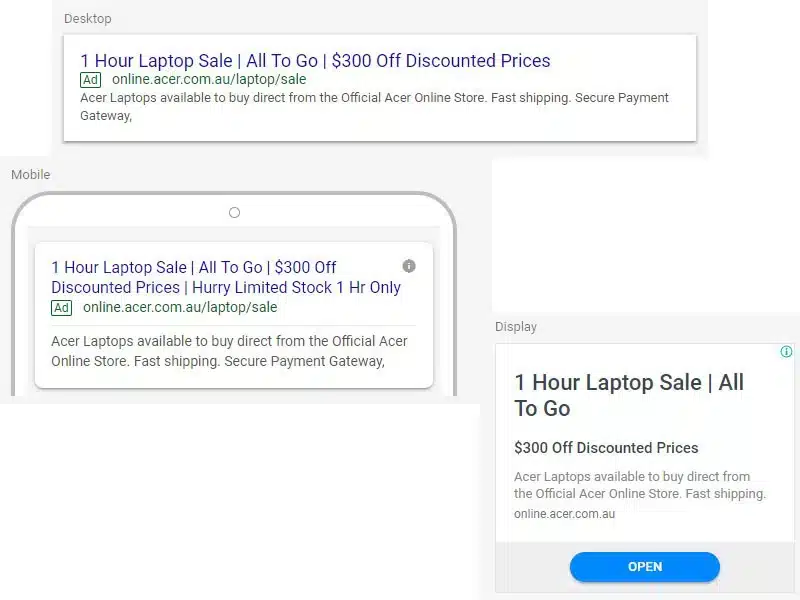
Step 2 — Fix the “SERP front door” (title + meta description)
Your page title and meta description are your storefront sign in Google.
Quick checks:
• Does the title clearly state what the page is about in plain English?
• Would a real person click it over similar results?
• Does it match the intent (guide vs checklist vs service vs pricing)?
• Does the meta description describe the outcome and who it’s for?
Even if Google rewrites parts of it, strong originals still help Google understand your page and can improve click-through rate when your snippet shows.
Step 3 — Check H1 clarity and scanning headings
Open the page and ask:
• In 5 seconds, can I tell what this page is and who it’s for?
• Is there one clear H1 that matches the main topic?
• Do H2s break the page into logical, skimmable sections?
• Is the next step obvious (call-to-action, form, booking)?
If visitors need to “read carefully” to understand the page, they’ll bounce. And if humans can’t scan it, Google often struggles to interpret it cleanly too.
Step 4 — Strengthen internal links (the sneaky performance multiplier)
Internal links do two major jobs:
• Help Google discover and prioritise pages
• Help users move to the next relevant step (which improves engagement)
A common silent issue is that valuable pages are buried or under-linked, so Google treats them as less important than they should be.
If you want a structured approach to internal linking, intent mapping, and practical implementation, check out professional SEO services in Australia.
Step 5 — Run a speed and mobile sanity check
You’re not aiming for perfection. You’re removing friction.
Look for:
• Very large images (multi-megabyte uploads)
• Sliders, heavy scripts, and auto-playing elements
• Slow or clunky mobile interaction
• Layout shifts (content jumping as the page loads)
Now let’s dig into the simple on-page issues that quietly hold sites back, and the fixes that work.
The simple on-page issues that quietly hold back websites (and how to fix them)
1) Your page title says what you are, not what people searched
A title like “Home | Business Name” or “Services | Company Name” wastes one of the strongest relevance signals on your page.
Even titles like “SEO Services” can be too broad.
What to do:
• Write titles that reflect the actual query and intent
• Include a clear service/topic and a useful modifier (Australia, pricing, checklist, guide)
• Keep it natural in Australian English (avoid spammy stuffing)
Better title patterns:
• Service + benefit + Australia
• Topic + year when it genuinely matters (e.g., a checklist updated annually)
• “How to…” or “Checklist” when the SERP shows people want steps
2) Your meta description is generic, so your click-through rate stays low
If your meta description could sit under any competitor’s page, it won’t drive clicks.
What to do:
• Use one sentence that states the outcome and audience
• Use a second sentence that adds a differentiator (process, proof, speed, clarity)
• Add a gentle CTA that matches the intent
Examples of differentiators that work (only if true):
• Australian-owned and operated
• Strategy plus implementation (not just advice)
• Transparent deliverables and reporting
• Clear process and timelines
3) Your headings are unclear (or you have multiple H1s)
Headings aren’t decoration. They’re the structure Google and humans use to interpret the page.
Common issues:
• An H1 that’s a slogan (“Helping you grow”)
• An H1 that’s too vague (“Our Services”)
• Multiple H1s because headings are used for styling
What to do:
• Use one clear H1 that matches the page’s main topic
• Use H2s for the major sections someone would scan for
• Use H3s for supporting detail and sub-steps
If your headings don’t tell a story when read on their own, the page is probably hard to parse.
4) The page doesn’t match the search intent (even if the keyword appears)
This is one of the biggest quiet blockers.
Example: you want to rank for “on-page SEO checklist”, but the content reads like a general essay about “why SEO matters”.
Google is increasingly intent-driven. If your page doesn’t satisfy the intent better than the competing results, you’ll stall.
What to do:
• Google your target query and scan the top results
• Identify the dominant intent (checklist, how-to, comparison, service, pricing)
• Reshape your content to satisfy that intent clearly and quickly
• Add the sections users expect (steps, examples, FAQs, templates)
If you want help mapping pages to intent and implementing changes across a site (not just recommendations), you can learn more about SEO services.
5) Your content is “thin” where it matters (not just in word count)
Thin content isn’t only short content. It’s content that doesn’t help people solve the problem.
Signs your content is thin:
• No practical steps or examples
• No proof (results, reviews, case studies, screenshots)
• No FAQs answering common objections
• Lots of generic statements and little specificity
What to do:
• Add a “How it works” section
• Include examples or mini templates people can copy
• Add proof blocks (testimonials, results, process screenshots)
• Use FAQs based on real customer questions (calls, emails, forms)
6) Your images look good, but they quietly slow the site
This is one of the most common hidden issues on service business websites.
Common culprits:
• Uploading images directly from phones or designers without compression
• Using heavy PNGs where a lighter format would do
• No resizing, no responsive image handling
• Large decorative images above the fold
What to do:
• Resize images to the maximum size they display on-screen
• Compress before uploading
• Use modern formats where supported (e.g., WebP)
• Remove decorative images that add weight but no value
Alt text tips:
• Keep it short and descriptive
• Describe what’s in the image (not a keyword list)
• Use it to support accessibility and clarity
7) Your internal links are inconsistent, sparse, or unhelpful
Internal linking is a low-effort lever that can unlock rankings and leads, especially on sites with multiple services and lots of blog posts.
Quiet internal link problems:
• Orphan pages (no internal links pointing to them)
• Important pages buried three clicks deep
• Blog posts that never link to service pages
• Vague anchors like “click here” that add no context
• Too many links to unrelated pages, confusing topical focus
What to do:
• Link from related blog posts to the most relevant service page
• Link between closely related services where it helps users
• Use descriptive, natural anchors that reflect the linked page
• Build topic clusters (pillar page + supporting posts)
If you want internal linking built into a broader strategy (content + technical + conversion), explore comprehensive SEO solutions for Australian businesses.
8) The page doesn’t show credibility, so people hesitate
Even if you rank, you won’t convert if visitors don’t trust you.
Quiet credibility gaps:
• No clear business details or service areas
• Only stock imagery, no real team or work examples
• No testimonials or outcomes
• No explanation of what happens next
• No proof of expertise (experience, certifications, associations)
What to do:
• Add a short “Why choose us” section with specifics
• Add a process section (3–5 steps is enough)
• Include real testimonials and outcomes where possible
• Make contact options obvious (call, form, booking)
9) You’re missing FAQs, so you lose AEO visibility
AI systems (and featured snippets) often pull from clear Q&A formatting. If your page doesn’t answer common questions, you’re giving competitors an easy win.
What to do:
• Add 5–10 FAQs that match real searches and objections
• Keep answers direct (2–4 sentences), then expand if needed
• Place FAQs where they naturally support the page (often near the bottom)
10) Your page is hard to read (even though the info is “there”)
Readability affects:
• Engagement (scroll depth, time on page)
• Comprehension (people finding what they need quickly)
• Trust (professionalism and clarity)
What to do:
• Break long paragraphs into short chunks
• Use bullet points for steps and lists
• Add subheadings that reflect user questions
• Remove jargon and corporate waffle
If you want a government benchmark for accessibility and inclusive content (helpful for readability and UX standards), use the Australian Government Style Manual guidance here: Accessible and inclusive content (Australian Government Style Manual).
11) You’ve accidentally created duplicate intent (keyword cannibalisation)
This is a classic quiet issue that can keep multiple pages stuck.
It happens when several pages could all rank for the same query, such as:
• Multiple service pages with near-identical copy
• A blog post and a service page targeting the same term
• Location pages that aren’t meaningfully different
• Old pages left indexed after a restructure
What to do:
• Pick one primary page per core query
• Merge or redirect weaker duplicates where appropriate
• Make each page distinct by purpose, audience, and content
• Strengthen internal links to the primary page
12) Your page lacks “entity signals”, so Google can’t connect the dots
Modern search is heavily entity-based: services, industries, locations, outcomes, tools, and related concepts.
If your page only repeats a keyword without showing depth, it may struggle to win.
What to do:
• Mention related terms naturally (services, tools, outcomes, industries)
• Add a “Who this is for” section
• Clarify service scope (Australia-wide or specific regions)
• Add supporting sections that show expertise (process, risks, timeframes, costs)
13) Your calls-to-action are vague, so the page doesn’t convert
“Contact us” is fine, but it’s often not specific enough.
What to do:
• Use a page-specific CTA (“Request an SEO audit”, “Get a quote”, “Book a call”)
• Reduce friction (short forms, clear next steps)
• Add a secondary CTA for info-intent visitors (download, checklist, guide)
14) There’s no “next click” pathway, so visitors stop
A strong page should guide users somewhere useful:
• Blog post → service page
• Service page → proof, FAQs, case studies
• Homepage → clear solution pathways
What to do:
• Add a “Related resources” section
• Add contextual internal links within paragraphs
• Include a short “Not sure where to start?” section with options
15) You’re missing simple page context that helps search engines interpret the content
You don’t need to become a schema expert overnight, but many sites miss basic cues:
• Clear service descriptions (not just broad marketing language)
• Clear business identity and coverage areas
• Consistent contact details where relevant
• FAQ sections written in plain Q&A form
What to do:
• Ensure each key page is explicit about what it offers
• Ensure headings clearly map the content
• Add FAQs and practical sections that demonstrate usefulness
AEO-friendly FAQs (answers designed for AI Overviews and snippets)
What are the most common on-page SEO issues?
The most common on-page SEO issues are unclear page titles, weak or mismatched headings, content that doesn’t satisfy search intent, thin or generic information, poor internal linking, slow pages (often due to heavy images), and missing FAQs that answer real questions.
Why is my website not ranking even though it looks good?
Because design and rankings aren’t the same thing. Google prioritises pages that match intent, demonstrate usefulness and credibility, load well on mobile, and are easy to interpret through structure (titles, headings, internal links). A site can look polished and still be unclear from a search perspective.
What’s the fastest on-page SEO fix that usually moves the needle?
Improving titles and headings to match search intent, then strengthening internal links to the page you want to rank. These changes can quickly improve clarity for Google and reduce confusion for users.
How do I check on-page SEO without paid tools?
Use free basics:
• Google Search Console (impressions, queries, pages with potential)
• Your browser (scan headings, intent match, CTAs, internal links)
• A speed test (identify heavy images and mobile friction)
• A repeatable checklist (structure, clarity, proof, FAQs)
Do I need to fix on-page SEO before building backlinks?
In most cases, yes. Links can amplify what’s already there, but if the page is unclear, mismatched to intent, or thin, you’ll waste time and money. Solid on-page SEO makes every future content and link investment perform better.
A simple on-page checklist you can run on every key page
Use this to catch the quiet issues fast:
• Title clearly matches the main query and feels click-worthy
• Meta description explains who it’s for and what they’ll get
• One H1, clear H2 structure, scannable layout
• Intro confirms the user is in the right place
• Content includes practical steps, examples, and proof
• Images are compressed and relevant; alt text is descriptive
• Internal links point to related pages and next steps
• FAQs answer real questions and objections
• Page has a clear CTA and an easy next action
• No duplicate pages competing for the same query
When to bring in help (and what to ask for)
If you’ve fixed the basics and you’re still stuck, it’s usually time for a proper audit that looks at:
• On-page and technical foundations together
• Content intent mapping (what each page should win)
• Internal architecture (topic clusters and user pathways)
• Conversion improvements (not just rankings)
When you talk to an agency or consultant, ask:
• What should we fix first, and why?
• What will you implement vs what you’ll only recommend?
• How will you track and report progress?
• What changes will improve leads, not just traffic?
Summary (the quiet wins that add up)
Most websites aren’t broken. They’re just missing clarity and trust signals.
Prioritise:
• Matching intent (not just targeting keywords)
• Strong titles, headings and scannable structure
• Better internal linking pathways
• Credibility signals and FAQs
• Faster mobile experience via image and page weight clean-up
If you improve these fundamentals, you give Google and users the same message: this page is relevant, helpful, and worth trusting.