


If you’ve ever paid for SEO and still felt unsure what you were getting, you’re not alone. The phrase What “Good SEO” Looks Like (Without the Jargon) sums up what most Australian business owners want: clear signs it’s working, a simple way to judge quality, and confidence you’re not being taken for a ride.
Good SEO isn’t mysterious. It’s measurable. And once you know what to look for, you can quickly separate “busy work” from the kind of SEO that actually drives enquiries, bookings, calls, and sales.
What good SEO actually means (in plain English)
At its core, SEO is about making your business easier to discover when people search for what you sell. “Good” SEO is when:
- The right people find you (not random traffic)
- You show up for searches that matter to your revenue
- Your website makes it easy to take the next step (call, book, buy, enquire)
- Results improve steadily over time (instead of spiking then disappearing)
It also means your website becomes more understandable to both humans and Google. That’s why good SEO usually improves your site’s clarity, structure, speed, and content quality as a by-product.
If you want a deeper look at what a structured campaign includes, you can explore professional SEO services in Australia and compare the inclusions to what you’re currently getting.
The biggest misconception: rankings aren’t the whole point
Rankings are useful, but they’re not the finish line.
A business can “rank” for a keyword and still get:
- Low-quality leads
- No conversions
- Traffic that doesn’t match the service area
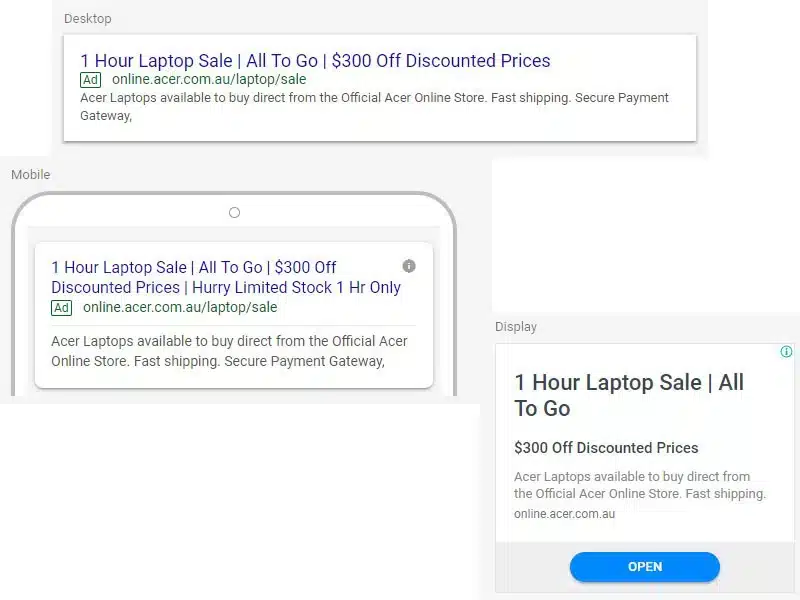
- Lots of impressions but few clicks (because the listing isn’t compelling)
Good SEO focuses on outcomes, not ego metrics.
Here’s a simple way to think about it:
- Activities: what gets done (technical fixes, content updates, link earning, optimisation)
- Outputs: what improves (indexing, visibility, click-through rate, keyword coverage, page speed)
- Outcomes: what matters (leads, calls, enquiries, revenue)
If your SEO reporting shows lots of activities, but no clear outputs or outcomes, that’s your first warning sign.
A simple “Good SEO” scorecard you can actually use
Use this as a practical checklist. You don’t need to be technical—just observant.
1) You’re getting the right kind of visibility
Good SEO increases visibility for searches that match how buyers actually look for services, such as:
- “near me” style intent (even if they don’t type “near me”)
- suburb/city + service queries
- problem-based searches (“fix…”, “repair…”, “best…”, “cost of…”)
- comparison searches (“X vs Y”, “best type of…”)
If you’re only showing up for broad, vague terms, it may look impressive, but it often won’t convert.
2) Your content matches what searchers want
When SEO is working, your pages feel like they were written for real people (because they were). They answer questions clearly, cover the next logical steps, and don’t bury the point under waffle.
A good test: if a customer landed on your page from Google, could they quickly tell:
- you offer what they need
- you serve their area (or work Australia-wide if relevant)
- what to do next
3) Your website becomes easier to use
Good SEO often improves the user experience because Google rewards websites that are helpful and easy to navigate.
Signs include:
- faster load times
- fewer broken pages
- clearer menus and service structure
- better mobile usability
- better internal linking (so visitors can find related answers)
4) Your lead quality improves over time
This is one of the best signals.
Even if total leads don’t jump overnight, you may notice:
- more “ready to buy” enquiries
- fewer price-shoppers and tyre-kickers
- more people referencing a specific page or service you published
- better alignment with your ideal work
5) Reporting becomes easier to understand, not harder
If you need an interpreter to understand your monthly report, it’s not serving you.
Good SEO reporting should show:
- what changed this month
- why it changed
- what you’re doing next
- what’s improving (and what isn’t yet)
- what you need from the client (approvals, info, access)
If you’re not seeing this, it may be time to learn more about our SEO services so you can benchmark what “good” looks like against your current provider.
What you should expect in 30, 90, and 180 days
SEO takes time, but “time” shouldn’t mean “nothing happens”.
Here’s a realistic, plain-English timeline for many Australian businesses (your mileage will vary based on competition, history, and how much needs fixing).
Days 1–30: foundations and visibility clues
In the first month, good SEO usually looks like:
- a clear strategy and keyword/service mapping plan
- technical issues identified (and often fixed quickly)
- indexing and crawl improvements
- baseline tracking set up (so you can measure progress)
You may start to see early movement in:
- impressions (your site appearing more often)
- click-through rate (if titles/descriptions are improved)
- some long-tail keywords (specific searches)
You typically won’t see a flood of leads in month one unless you already had a strong foundation.
Days 31–90: meaningful traction
By months two and three, you should see:
- more keywords ranking (especially long-tail and service-specific)
- better performance of your key service pages
- content that answers real questions (and starts to bring in traffic)
- clearer conversion paths (buttons, calls-to-action, contact points)
This is where good SEO begins to look like real momentum.
Days 91–180: compounding results
This is the phase where solid SEO compounds:
- authority grows
- content begins to rank more consistently
- your “top pages” start doing heavier lifting
- lead volume and quality are easier to attribute to organic search
If you reach 6 months and the story is still vague—no meaningful growth, no clear wins, no explanation—it’s fair to question the strategy.
What a quality SEO campaign includes (without the jargon)
If you’re paying for SEO, these are the major components you should expect in some form.
Technical SEO: your site can be found and understood
This covers things like:
- whether Google can crawl your site properly
- whether pages index correctly
- page speed and mobile performance
- duplicated or thin pages
- broken links and messy redirects
- structured layout so search engines understand what matters
You don’t need to memorise technical terms—just know that if these basics are broken, everything else is harder.
On-page SEO: your key pages are built to rank and convert
This includes:
- clear headings and structure
- helpful page copy that matches intent
- titles and descriptions that earn clicks
- internal links that help users navigate
- optimised images (size + relevance)
Content: you’re answering the questions buyers ask
Good content isn’t “blogging for the sake of it”.
It’s publishing pages that:
- explain services simply
- reduce uncertainty (“how much does it cost?”, “how long does it take?”, “what’s included?”)
- prove expertise with examples, processes, and real explanations
- target the questions that lead to enquiries
Authority: your business becomes a “trusted choice”
In plain English: other reputable websites and signals on the web help validate you.
This may involve:
- earning links naturally (not buying spam links)
- local citations for location-based businesses
- digital PR and partnerships
- improving brand signals (so people search for you by name)
If you want the whole package done properly, compare your current setup to comprehensive SEO solutions for Australian businesses so you can see whether you’re getting a complete approach or just one slice.
The SEO metrics that matter (and the ones that don’t)
Here’s the simplest way to evaluate SEO reporting.
Metrics worth caring about
- Organic enquiries / leads: form submissions, calls, bookings, quote requests
- Organic conversion rate: are visitors taking action?
- Click-through rate (CTR): are people choosing your listing?
- Keyword coverage (relevant terms): not just one “trophy” keyword
- Top landing pages: which pages bring in traffic and leads?
- Impressions + clicks trends: are you getting more chances to be chosen?
- Engaged sessions / time on page: are people actually consuming the content?
- Local visibility (if relevant): growth in Maps/local pack interactions
Metrics that can mislead you
- Raw traffic alone: more visitors doesn’t always mean more customers
- “We built X links”: the quality matters more than the number
- Rankings for irrelevant keywords: looks good, doesn’t pay bills
- A single vanity keyword: often competitive and not the best buyer intent
- “Domain authority” as the headline: it’s not a KPI you bank
A good report connects actions to outcomes. A bad report hides behind jargon.
How to spot bad SEO fast (red flags)
If any of these show up, treat it as a warning:
- They won’t explain what they’re doing (“it’s proprietary” is often a cop-out)
- They promise #1 rankings (no one controls Google)
- They avoid showing work completed (vague updates, no specifics)
- They lock you out of accounts (you should own your analytics, Search Console, and listings)
- They build “too good to be true” links (spam links can hurt long-term)
- They publish thin, generic content that could fit any business
- They don’t ask about your customers (SEO without understanding buyers is guesswork)
- They never talk about conversions (traffic without action is a vanity project)
Good SEO feels transparent. Bad SEO feels like smoke and mirrors.
DIY checks you can do this week (even if you’re not technical)
You don’t need to be an SEO expert to sanity-check performance.
Check 1: Search your service + location
Try searches a real customer would use. Ask:
- Do I appear anywhere?
- If I do appear, does the snippet look trustworthy and clear?
- Does the page I land on actually answer the search?
Check 2: Look for “dead” or confusing service pages
Open your core service pages on mobile. If they’re slow, confusing, or hard to navigate, SEO will struggle because users bounce.
Check 3: Are you publishing content that answers real questions?
A quick test: could a customer read a page and feel more confident choosing you?
If the answer is no, content might be written for algorithms rather than people.
Check 4: Use a government checklist as a baseline
Australian government resources often explain digital basics in plain language. A good starting point is the guidance on improving your search engine rankings, which outlines fundamental SEO principles in a way that’s easy to follow.
AEO-friendly FAQs (the answers people actually want)
What’s the simplest definition of SEO?
SEO is the process of improving your website so search engines can find it, understand it, and show it to people searching for what you offer—without paying for ads.
How long does SEO take to work in Australia?
Many businesses see early signs (impressions, long-tail rankings) within 4–8 weeks, meaningful traction around 2–3 months, and stronger compounding outcomes from 3–6 months onward. Competitive industries can take longer, but the work should still be visible and measurable along the way.
Is SEO just content and keywords?
No. Content and keywords matter, but good SEO also relies on technical health, site structure, user experience, and authority signals. If any of those are ignored, results can plateau.
What if my traffic is up but leads aren’t?
That usually means one of three things:
- You’re attracting the wrong searches (mismatch in intent)
- The page isn’t converting (weak offer, unclear next steps, poor UX)
- You’re ranking for information-only queries instead of buyer-ready searches
Good SEO fixes the path from search → page → action.
How do I know if my SEO agency is doing real work?
You should be able to see:
- a clear plan and priorities
- specific work completed (not vague statements)
- improvements to key pages and technical issues
- reporting that ties actions to outcomes
- proactive communication and requests for approvals/info
If you feel confused every month, that’s a sign the process isn’t client-friendly.
Can I do SEO myself?
You can absolutely improve basics—especially content quality, clarity, and technical hygiene. However, most business owners hit a ceiling once competition increases or technical issues stack up. That’s when a structured campaign becomes valuable.
Bringing it together: what “good” looks like in the real world
So, what does good SEO actually look like when it’s working?
It looks like:
- clear improvement trends (visibility, clicks, relevant rankings)
- better-performing service pages (not just blog traffic)
- fewer technical issues and a cleaner website experience
- better leads over time, not just more “visits”
- reporting that makes sense and supports decisions
- a strategy you can explain to someone else in two minutes
If your SEO doesn’t feel like that, you don’t need more jargon—you need a clearer plan, better execution, and reporting that connects effort to revenue.
If you’d like a professional second opinion, start by reviewing professional SEO services in Australia and comparing inclusions, transparency, and outcomes to what you’re receiving now.