


If you have started hearing that SEO is dead and generative engine optimisation is the new thing, treat that with healthy suspicion, because it is mostly wrong. The two overlap far more than the breathless explanations admit. What is true is that search is changing: people increasingly get an answer written for them by an AI assistant rather than a list of ten blue links, and being named in that answer is a different goal from ranking first in the list. This article cuts through the hype to set out what genuinely changes between generative engine optimisation and SEO, what stays exactly the same, and a simple test you can run on your own business today to see whether you appear in AI answers at all.
Generative engine optimisation is the work of getting a business named and cited inside AI-generated answers, rather than only in the ranked list of links. It overlaps heavily with SEO, because both depend on clear, factual, well-structured pages, but it is measured by whether the business is mentioned, not by position.
The three terms and what they actually mean
There are three terms floating around this subject, and it helps to define them plainly before going further, because two of them describe much the same work.
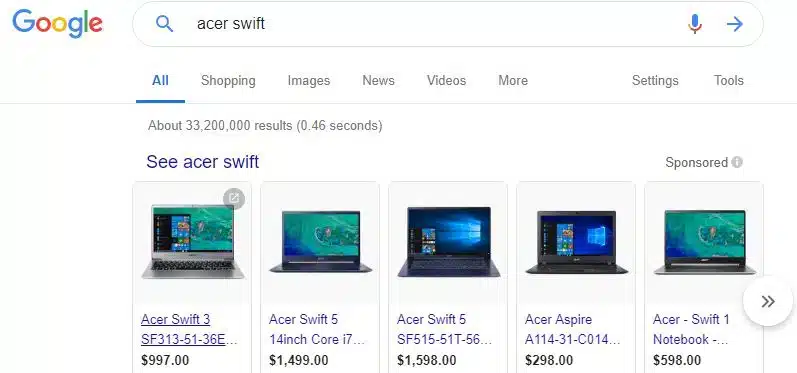
Classic SEO, search engine optimisation, is the familiar discipline of getting a website to rank well in the traditional search results, the ranked list of links a search engine returns. The goal is position: being on page one, ideally near the top, so people click through to the site.
Generative engine optimisation, often shortened to GEO, is the work of getting a business named and cited inside the answers that AI assistants generate. When someone asks an AI assistant a question, and it writes back a paragraph of answer, GEO is about making sure your business is mentioned in that paragraph, and ideally linked.
Answer engine optimisation, or AEO, describes essentially the same goal: being the business that an answer engine surfaces when it responds to a question. In practice, generative engine optimisation and answer engine optimisation refer to much the same work: getting named in AI-generated or answer-style results, and the two terms are often used interchangeably.
So of the three, classic SEO is about ranking in a list, while GEO and AEO are two names for the newer goal of being cited in an answer. The important thing to take from this is that GEO and AEO are not two different disciplines you need to budget for separately; they are the same effort described with different labels, and both sit alongside SEO rather than replacing it.
What stays the same
Here is the part the “SEO is dead” crowd skips: the foundations of appearing in AI answers are almost entirely the same as the foundations of ranking well, because AI assistants are reading the same web everyone else is.
Crawlable pages still matter, because an AI assistant can only mention what it can find and read. If your pages are not accessible and readable, they cannot be drawn into an answer any more than they could rank.
Clear structure still matters, since well-organised content with sensible headings is easier for both search engines and AI systems to understand and pull from.
Consistent business information still matters: your name, what you do, where you operate, presented consistently so the information is unambiguous.
Genuine expertise still matters, because content that actually demonstrates knowledge and answers the question properly is what gets surfaced, in a ranked result or an answer alike.
And internal linking still matters, connecting your pages so authority flows through the site and everything is easy to navigate and understand.
None of this is new, and none of it is going away. Strong SEO services already build all of it, which is exactly why the honest framing is that GEO builds on SEO rather than replacing it. A business with sound SEO foundations is already most of the way to appearing in AI answers, because the two draw on the same well-made pages. If anyone tells you GEO means throwing out your SEO and starting again, they are selling you something.
What genuinely changes
That said, there are real differences, and they are worth understanding so you know where to put the extra effort.
The first is being cited rather than ranked. In classic SEO, success is a position in a list and the click that follows. In an AI answer, there may be no list to rank in, so success is being named in the written answer itself, and ideally linked as a source. The goal shifts from “where do we sit in the list” to “are we in the answer at all”.
The second is that answers are assembled from several sources. A ranked result points to one page. An AI answer is often synthesised from multiple sources across the web, stitched into a single response. That means it is not enough to have one strong page, your business needs to be present and consistent across the web so it is drawn in wherever the answer is assembled from.
The third follows directly: consistency of business facts across the web matters more. Because the answer is pieced together from many places, conflicting or inconsistent information about your business- in one place it says one thing and elsewhere another- undermines whether an AI system trusts and uses it. The facts about your business need to line up everywhere they appear.
The fourth is that measurement shifts from position to mention. You can no longer only track “are we ranking number three for this keyword”. You now also have to track “when someone asks this question of an AI assistant, are we named in the answer, and are we linked?”. That is a different thing to measure, and it means watching your presence in answers, not just your position in results. These four changes are real, but notice that none of them undoes the foundations in the previous section; they build on top of them.
How to test whether your business appears in AI answers
You do not need special tools to find out where you stand; you can run a simple test yourself in half an hour, and it is the most useful thing you can do before changing anything. Here is the process.
First, write down the five questions a buyer would ask. Think about what someone looking for your product or service would actually type into an AI assistant: the real questions they ask before they buy, not keyword phrases. Something like “who are the best providers of X in my city” or “how do I choose a Y”. Five is enough to start.
Second, put each question to an AI assistant. Take each of your five questions and ask it, exactly as a potential customer would, in an AI assistant or AI search tool. Read the answer it gives back.
Third, record whether your business is named and whether it is linked. For each answer, note two things: is your business actually mentioned by name in the response, and if it is, is it linked as a source? Being named is good, being named and linked is better, and being absent is what you need to fix. Write it down for each of the five questions.
Fourth, repeat monthly. This is not a one-off check. Run the same five questions again each month and record the results, so you can see whether your presence in AI answers is improving, holding or slipping over time.
That record, which of your buyer questions you appear in, named or linked, tracked month to month, is the single clearest picture of where your business stands in AI answers. It costs nothing but a little time, and it tells you exactly where the gaps are before you spend anything fixing them.
What to fix first if you are not appearing
If the test shows your business is absent from the answers that matter, there is a sensible order to work through, from the foundational to the refined.
Start with business information consistency. Make sure your business name, what you do, where you operate and your core details are presented consistently everywhere they appear online. Since AI answers are assembled from across the web, conflicting information is one of the first things to undermine you, so lining it up is the foundation everything else rests on.
Next, put direct answers on your service pages. Make sure each page clearly and directly answers the questions a buyer would ask about that service, in plain language, rather than burying the answer or dancing around it. An AI system surfacing an answer needs the answer to actually be on the page in a form it can lift.
Then, use question-led headings. Structure your pages around the questions people actually ask, using those questions as headings, so both the questions and their answers are easy to find and match to what someone is asking an AI assistant. This makes your content far easier to draw into an answer.
Finally, add proof. Back up what you say with genuine evidence of expertise and credibility, the kind of substance that makes your business a trustworthy source worth citing. Answers tend to surface sources that demonstrate real authority, so proof is what moves you from “could be mentioned” to “worth mentioning”.
Worked through in that order- foundations first, then clarity, then structure, then proof- this is a practical path from being absent to being cited, and most of it is the same good practice that strengthens your rankings too.
Where this leaves you
The honest summary is that generative engine optimisation and SEO are far more alike than different: both rest on clear, factual, well-structured pages, and the newer work builds on the old rather than replacing it. What genuinely changes is the goal, being cited in an answer rather than ranked in a list, and how you measure it, tracking mentions rather than only positions. Run the five-question test on your own business, fix the foundations first, and you are most of the way there. If you would like help getting your business named in AI answers, our answer engine optimisation service is built to do exactly that, on top of the SEO foundations that make it possible.