

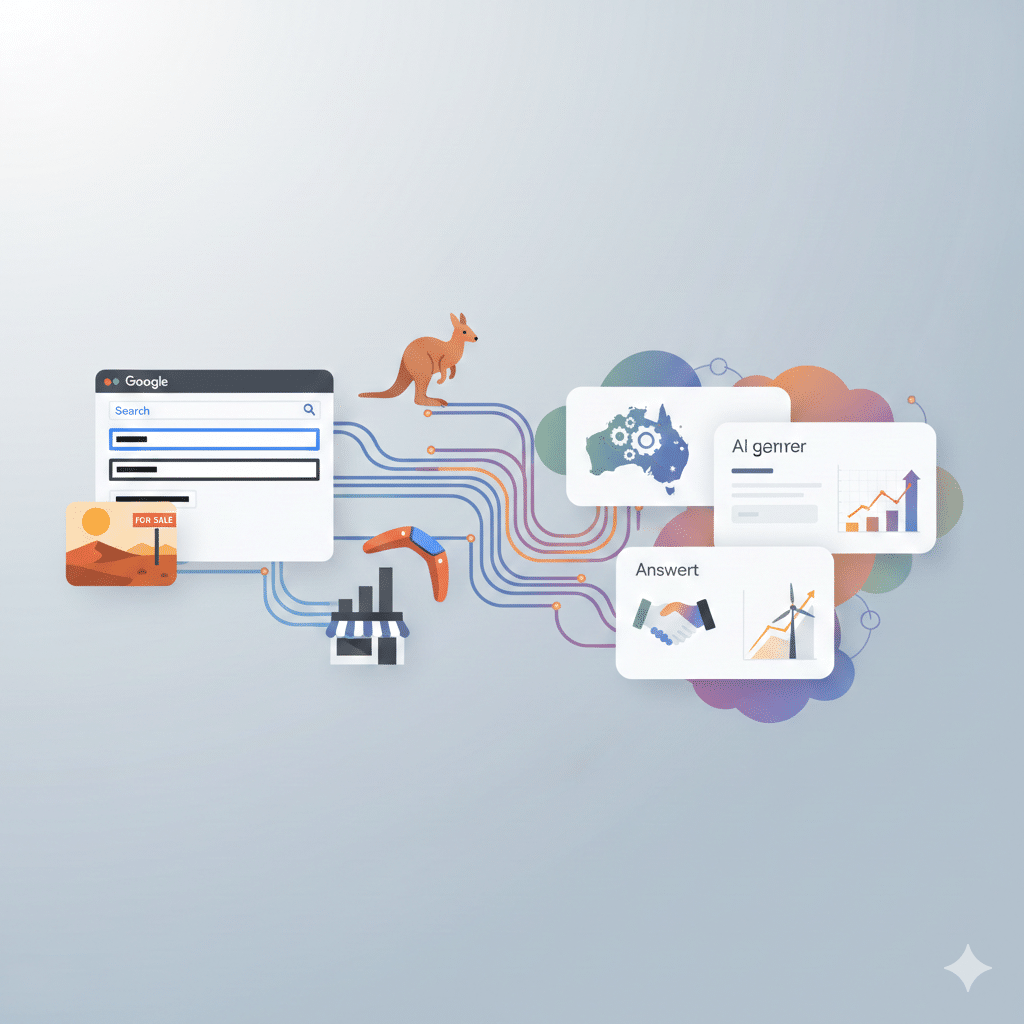
Search in Australia has changed — and it’s not changing back.
For years, businesses focused almost exclusively on ranking in Google’s organic results. Today, that approach alone is no longer enough. Users increasingly rely on Google AI Overviews, ChatGPT, Gemini, and other answer engines to get instant responses, often without clicking a single website.
This shift has created confusion for business owners and marketers alike.
If AI answers the question directly, does SEO still matter?
Is Answer Engine Optimisation replacing SEO?
Or do modern businesses now need both?
The truth is simple but often misunderstood: SEO and AEO do different jobs. They complement each other, and relying on only one creates serious visibility gaps.
This guide explains the practical difference between AEO and SEO, how each works in real-world scenarios, and why Australian businesses that want sustainable growth should be using both together.
What SEO Still Does Well in Modern Search
SEO Is About Rankings, Traffic, and Intent
Search Engine Optimisation (SEO) focuses on improving a website’s visibility in traditional organic search results. It ensures your pages appear when users actively search for products, services, or solutions.
SEO typically involves:
• Keyword research and on-page optimisation
• Technical performance and crawlability
• Content relevance and depth
• Internal linking and site architecture
• Backlink and authority development
For high-intent searches, SEO remains incredibly effective. When someone searches for a service provider, product, or local business, organic listings still drive meaningful clicks.
SEO continues to underpin:
• Lead generation
• Ecommerce revenue
• Local discovery
• Brand awareness
Without SEO, most businesses would struggle to be discovered at all.
Where SEO Alone Starts to Fall Short
SEO struggles when user behaviour shifts from browsing to answer-seeking.
SEO becomes less effective when:
• Searches are informational rather than transactional
• Users want immediate explanations
• Google displays AI Overviews above organic results
• Zero-click searches dominate the SERP
For example, when a user searches “What’s the difference between AEO and SEO?”, Google may show an AI-generated summary that answers the question instantly.
Even a number-one ranking can be bypassed.
This isn’t a failure of SEO — it’s a change in how people consume information.
What Is AEO (Answer Engine Optimisation)?
AEO Is About Becoming the Source AI Trusts
Answer Engine Optimisation (AEO) focuses on structuring content so AI systems select it as a trusted source when generating answers.
Instead of asking:
“How do we rank higher?”
AEO asks:
“How do we get the answer?”
This is exactly what Answer Engine Optimisation services for Australian businesses are designed to achieve — visibility even when users don’t click through to a website.
AEO targets platforms such as:
• Google AI Overviews
• ChatGPT
• Gemini
• Perplexity
• Voice assistants
If SEO helps users find your website, AEO helps AI recommend your expertise.
How Answer Engines Decide What to Show
Answer engines do not rank pages the same way Google does.
Instead, they:
• Analyse multiple authoritative sources
• Cross-check information for accuracy
• Prioritise clarity and direct answers
• Evaluate topical authority and consistency
• Generate natural-language summaries
Content that performs well in AEO:
• Answers specific questions clearly
• Uses structured headings and sections
• Demonstrates genuine expertise
• Aligns with recognised entities and concepts
This is why optimising for AI-powered search results requires more than traditional SEO tactics.
AEO vs SEO — The Practical Differences That Matter
Purpose and Outcome
SEO focuses on:
• Ranking pages
• Driving website traffic
• Capturing active demand
AEO focuses on:
• Being cited in AI-generated answers
• Building trust and authority
• Influencing decisions before a click occurs
Both deliver value, but at different points in the customer journey.
How Content Is Evaluated
SEO content is assessed based on:
• Keyword relevance
• Backlinks
• Technical optimisation
• User engagement signals
AEO content is assessed based on:
• Accuracy and clarity of answers
• Contextual understanding
• Entity relationships
• Demonstrated expertise
Long content alone does not win AEO. Clear, authoritative answers do.
Measuring Success
SEO success is measured through:
• Rankings
• Organic traffic
• Conversions
AEO success is measured through:
• Inclusion in AI answers
• Brand mentions and citations
• Cross-platform visibility
A business can lose low-quality clicks while gaining significant influence — and influence increasingly drives purchasing decisions.
Is AEO Replacing SEO?
No — and positioning them as competitors is a mistake.
SEO still:
• Builds domain authority
• Captures high-intent searches
• Drives measurable revenue
AEO:
• Protects visibility as search evolves
• Extends reach beyond traditional SERPs
• Positions brands as trusted experts
Understanding how Answer Engine Optimisation works in practice allows businesses to evolve without abandoning proven SEO foundations.
Why SEO and AEO Work Best Together
SEO Builds the Authority AEO Depends On
AI systems rely on trusted sources. Strong SEO contributes to that trust by:
• Establishing domain credibility
• Building topical depth
• Demonstrating consistency over time
Without SEO, AEO lacks the authority signals AI systems rely on.
AEO Expands Visibility Beyond Clicks
AEO ensures your expertise appears:
• Above organic listings
• Inside AI-generated summaries
• Across multiple AI platforms
This is especially valuable for:
• B2B services
• Complex or technical offerings
• Educational content
• Thought leadership positioning
SEO attracts visitors. AEO shapes perception before visitors even arrive.
Real-World Australian Business Scenarios
When SEO Alone Is Often Enough
• Local service searches
• Product-driven queries
• Branded searches
When AEO Becomes Essential
• Industry explanations
• Strategy comparisons
• Emerging technologies
• Early-stage buyer research
In competitive Australian markets, businesses that rely solely on SEO risk being excluded from the conversation before buyers ever reach their website.
How Google AI Overviews Are Reshaping Search
Google AI Overviews summarise information from multiple trusted sources and present instant answers.
Google recommends creating helpful, people-first content that demonstrates expertise and clarity, as outlined by Google Search Central.
These principles align closely with AEO best practices.
Trust, Authority, and Australian Standards
Trust signals matter more than ever in AI-driven search.
Australian businesses are increasingly expected to demonstrate transparency, credibility, and compliance. Guidance provided by business.gov.au reinforces the importance of clear, accurate, and user-focused online content — principles that strongly align with both SEO and AEO.
This emphasis on trustworthy information directly influences how AI systems evaluate sources.
Common AEO Myths (Debunked)
“AEO Is Only for Big Brands”
False. Niche expertise often outperforms brand size in AI-generated answers.
“AEO Kills Website Traffic”
AEO reduces low-intent clicks but increases qualified awareness and trust.
“SEO Is Dead”
SEO remains foundational — it’s just no longer sufficient on its own.
Do Australian Businesses Need AEO Now?
Yes — particularly if:
• Your service requires explanation
• Your buyers research before contacting you
• You operate in a competitive or technical industry
AEO is no longer optional for future-proof visibility.
The Future of Search in Australia
Search is evolving toward:
• Fewer clicks
• More AI-generated summaries
• Greater emphasis on trust
• Entity-based evaluation
SEO ensures you’re findable.
AEO ensures you’re chosen.
Businesses that integrate both will outperform those that rely on rankings alone.
Final Verdict — AEO vs SEO
The practical difference isn’t which strategy wins.
SEO helps people find your website.
AEO helps AI recommend your expertise.
If your strategy stops at rankings, visibility will decline.
If your strategy includes both, you build durable authority in an AI-driven search landscape.