


If you’ve ever wondered How Brand Searches Help Your SEO (And Why It Matters), you’re not alone. Across Australia, more businesses are realising that SEO isn’t just about “ranking for keywords” — it’s about becoming the brand people actively look for, remember, and choose. When more people type your business name (or close variations of it) into Google, it sends powerful demand and trust signals that can improve performance across your entire search presence.
Brand searches won’t magically replace technical SEO, content, or links. But when you combine strong SEO fundamentals with growing branded demand, you often see a compounding effect: better click-through rates, stronger engagement, more natural links and mentions, and a higher likelihood that Google (and AI-driven search experiences) understand your business as a credible entity.
What is a brand search, exactly?
A brand search is any query where the user is clearly looking for your brand (or a close variation). It usually includes your:
• Business name (e.g., “Nifty Marketing Australia”)
• Brand + service (e.g., “Nifty SEO services”)
• Brand + location (e.g., “Nifty Marketing Brisbane”)
• Brand + review intent (e.g., “Nifty Marketing reviews”)
• Brand + contact intent (e.g., “Nifty Marketing phone number”)
• Brand + product intent (e.g., “Nifty content marketing package”)
Brand searches are often navigational or high-intent. The person already knows you exist and is trying to find you, verify you, compare you, or buy from you.
Brand searches vs branded keywords vs non-brand keywords
It helps to separate these three buckets:
• Brand searches: people searching for your name (high intent, high trust potential)
• Branded keywords: broader terms that include your brand name (still high intent)
• Non-brand keywords: category terms like “SEO agency Australia” (discovery-focused, competitive)
The best-performing SEO strategies in competitive markets usually don’t pick one bucket. They build all three, in the right order, with the right expectations.
Are brand searches a Google ranking factor?
This is where nuance matters.
Brand searches are not widely considered a simple, direct “ranking factor” you can turn up like a dial. But brand searches can influence multiple signals that do affect outcomes, including:
• Higher click-through rate (CTR) when your result appears
• Improved user engagement signals (because people want your brand specifically)
• More repeat visitors and navigational behaviour (brand familiarity)
• More backlinks and unlinked brand mentions (earned media, referrals, partnerships)
• Stronger entity recognition (Google understanding your brand as a real, distinct organisation)
So the more practical question is:
If people search for your brand more often, does your SEO performance usually improve?
For many Australian businesses, the answer is yes — especially when the brand demand is real and supported by strong on-site experience.
Why brand searches can lift SEO performance
1) Branded demand tends to increase click-through rate
When someone recognises your brand in the search results, they’re more likely to click you — even if you’re not in position #1.
That matters because in many industries, the difference between “seen” and “clicked” is the difference between:
• A page that slowly declines (despite decent rankings)
• A page that holds steady or grows (because it wins the click)
Brand familiarity can be the edge that turns impressions into traffic.
2) Brand searches often correlate with trust signals Google can interpret
When your brand grows, you tend to accumulate digital “proof” that you exist and that people value you:
• Mentions in articles, podcasts, newsletters, community groups
• Links from partners, suppliers, clients, industry associations
• Reviews and reputation signals
• Consistent business information across the web
• Search behaviour that shows people actively seek you out
Even if Google doesn’t count “brand searches” as a simple scoring input, these surrounding signals are hard to ignore.
3) Brand searches support stronger conversion rates (which helps your SEO investment pay off)
One of the most underrated SEO problems is this: businesses obsess over rankings, but ignore conversion.
Branded traffic often converts better because:
• The user is already warmed up
• There’s less price-shopping
• The decision feels safer (“I’ve heard of them”)
• The path to action is more direct
This doesn’t just boost revenue. It also makes it easier to justify investing in content, technical improvements, and authority-building that improve non-brand SEO too.
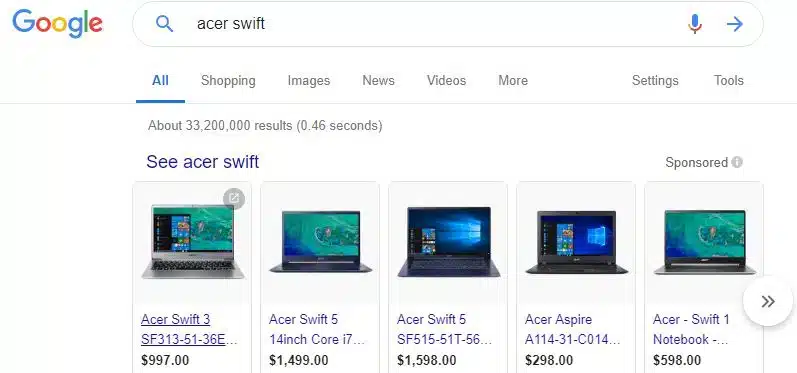
4) Brand searches help you win more SERP real estate
When a brand is established, Google is more likely to show expanded brand-related features, such as:
• Sitelinks beneath your homepage
• Branded knowledge results (in some cases)
• “People also ask” questions that reference your brand
• More prominent review snippets (where eligible)
• Auto-suggest predictions that include your brand
The result is simple: you take up more space, push competitors down, and reduce friction for searchers who want to find you.
5) Brand searches make non-brand SEO more resilient
Algorithm volatility is real, and many Australian businesses feel it hardest in competitive niches.
A strong brand can soften the impact because:
• People search for you directly, regardless of small ranking fluctuations
• Repeat customers can find you without relying on generic queries
• Your content gets shared and cited more naturally (which builds authority over time)
• You’re less dependent on a single page or single keyword to drive leads
In other words, brand searches can be a stabiliser in a world where purely “keyword-based” SEO is more fragile than it used to be.
The brand-to-SEO flywheel: a simple framework
If you want a practical mental model, use this flywheel:
Brand Demand → Brand Signals → SEO Outcomes
Brand Demand (people want you)
• More branded searches
• More direct traffic
• More referrals and word-of-mouth
Brand Signals (the web reflects that demand)
• Mentions, backlinks, citations
• Reviews and reputation growth
• Higher CTR and engagement
SEO Outcomes (your performance improves)
• Better rankings and visibility
• Lower cost per lead over time
• Stronger conversion rates and retention
The key is that you don’t “hack” brand demand. You earn it.
How to measure brand searches (without overcomplicating it)
You don’t need enterprise tooling to get clarity. Most Australian businesses can track branded demand using a simple setup.
1) Google Search Console: branded query tracking
In Search Console, look at your Performance report and review queries that include:
• Your business name
• Common misspellings
• Your key staff names (if relevant)
• Your product/service names (if branded)
• Your slogan or tagline (if used)
Track these over time:
• Total clicks from branded queries
• Total impressions from branded queries
• Branded CTR
• Branded average position (mainly to monitor brand protection)
Tip: Create a simple “brand query list” and update it quarterly as people start searching for new variations.
2) Google Analytics 4: brand-assisted journeys
Brand doesn’t always get the “last click”. Often it’s the closer.
In GA4, watch for:
• Returning users (brand familiarity)
• Direct traffic trends (often rises with brand demand)
• Assisted conversions (brand touchpoints before conversion)
• Engagement metrics on key pages (time, scroll depth, events)
3) Google Trends: a rough directional view
Google Trends can help you see whether branded interest is rising. It’s not perfect, but it’s useful for direction, not precision.
4) Sales team and customer feedback loops
This is the simplest measurement that many businesses ignore:
• “How did you hear about us?”
• “What made you search for us?”
• “What did you type into Google?”
If you start hearing your brand repeated back to you more often, branded demand is growing — even before dashboards catch up.
How to increase brand searches ethically (and sustainably)
If you want more people searching your brand, you need more people to remember it and talk about it. Here’s what actually works.
Build a clear, repeatable brand message
Confused brands don’t get searched. Memorable brands do.
Focus on:
• One primary promise (what you do and who you do it for)
• Consistent naming (avoid swapping service names constantly)
• Consistent visuals (logo, colours, tone)
• Consistent category signals (make it obvious you’re an SEO provider, a tradie, a clinic, etc.)
If you’re offering SEO and want a stronger pipeline, make sure your positioning connects clearly to outcomes Australian businesses care about: visibility, enquiries, trust, and measurable growth.
If you want a structured approach from strategy through delivery, explore our professional SEO services in Australia for businesses that want results, not fluff.
Publish assets that people reference by name
Brand searches grow when people have a reason to look you up later.
Examples:
• Original research (even small-scale surveys in your niche)
• A simple calculator or free tool
• A genuinely helpful guide that gets shared internally at companies
• A checklist that your audience can use immediately
• Templates (emails, briefs, SOPs, quote request templates)
When you publish these, promote them beyond SEO. Brand demand is earned through distribution, not just indexing.
Be present where Australians actually discover brands
Depending on your industry, that might be:
• LinkedIn (B2B, professional services)
• Instagram (consumer services, lifestyle brands)
• YouTube (education-driven categories)
• Podcasts (niche authority building)
• Local community groups (especially for service-based businesses)
• Industry associations and supplier networks
The goal isn’t to “go viral”. It’s to create repeated exposure so people remember your name when they need you.
Earn mentions and links through real relationships
Brand searches often follow exposure.
A practical approach:
• Partner with complementary businesses (web design, PR, accounting, legal, IT, builders, allied health referrers)
• Contribute to industry roundups and interviews
• Pitch useful commentary to Australian publications in your niche
• Sponsor events where your ideal customers are already present
• Build case studies that clients are proud to share
If you want this to translate into long-term SEO growth, it should be tied back to a strategy that aligns content, authority, and technical foundations. You can learn more about SEO services for Australian businesses that build these layers in the right order.
Tighten up your branded SERP experience
When someone searches your brand, what do they see?
You want brand searches to reinforce trust, not create doubt.
Check:
• Do your title tags and meta descriptions clearly match your brand promise?
• Is your homepage easy to navigate, fast, and mobile-friendly?
• Are your services clearly explained without jargon?
• Do you have credible proof (case studies, testimonials, certifications, partner logos)?
• Are your contact details clear and consistent?
If you operate in multiple locations, consistency matters even more.
Use reviews to trigger brand recall
Reviews don’t just influence conversion. They can spark brand searches.
How?
• Someone hears your name, then searches “your brand + reviews”
• Someone sees your brand on social, then searches “is this legit?”
• Someone gets referred, then searches to validate
Build a simple review habit:
• Ask at the right moment (after a win)
• Make it easy (one link, one ask)
• Respond professionally
• Use feedback to improve your offer and messaging
Protect your brand identity as you grow
Brand demand is valuable, and protecting it matters. If you’re investing in brand awareness, it’s worth understanding trade mark basics and whether it’s relevant for your business. Here’s the Australian Government’s guidance on trade marks so you can make informed decisions as your brand grows.
Common mistakes that stall branded search growth
Chasing quick wins that don’t build memory
If your marketing generates clicks but nobody remembers your name, branded searches won’t rise.
Examples:
• Generic ads that don’t mention the brand clearly
• Content that reads like everyone else’s content
• Over-reliance on marketplaces without brand attribution
• Inconsistent naming across platforms
Ignoring brand demand because “SEO should do all the work”
SEO is powerful, but it works best when demand exists. In highly competitive industries, brand is often the differentiator that turns visibility into action.
Making your brand hard to spell or remember
If people can’t recall it, they won’t search it.
You don’t need a boring name — you need a clear, memorable one that can be typed easily by real humans.
How brand searches connect to AI-driven search
Search is shifting. People still Google, but discovery is also happening through AI summaries, chat tools, and recommendation-style experiences.
In those environments, brand matters because:
• AI systems often rely on recognised entities, sources, and consistent mentions
• People trust familiar names when multiple options are presented
• Branded demand signals that your business is “known”, not just “optimised”
If your brand becomes the one people ask for by name, you’ve moved beyond competing purely on keywords.
That’s why SEO today isn’t just about rankings. It’s about building a brand that wins the click, earns the trust, and becomes the default choice.
If you want a strategy that aligns brand, content and authority, our team offers comprehensive SEO solutions available for Australian businesses ready to grow sustainably.
A practical 90-day plan to grow branded searches in Australia
Here’s a realistic plan that doesn’t require a massive team.
Weeks 1–2: Foundation and tracking
• Set up branded query tracking in Search Console
• Audit your brand SERP (what shows up when searching your name)
• Tighten titles/meta on key pages
• Ensure consistent business info across platforms
• Create or refresh your “About” and proof assets (testimonials, case studies, credentials)
Weeks 3–6: Publish one “name-worthy” asset
Choose one:
• A definitive guide for your niche
• A small research piece (even a client survey or industry poll)
• A checklist or template
• A simple tool or calculator
Then distribute it:
• LinkedIn posts (multiple angles, not one post)
• Email signature and newsletters
• Partner shares
• Community groups where appropriate
• Outreach to niche publications or newsletters
Weeks 7–10: Partnerships and mentions
• Identify 10 complementary partners in Australia
• Propose one collaborative piece each (webinar, co-authored article, interview, case study)
• Focus on real value, not link trading
Weeks 11–12: Review and refine
• Compare branded query trends vs baseline
• Track changes in CTR on key pages
• Review assisted conversions in GA4
• Repeat what worked, cut what didn’t, and plan the next asset
FAQs: Brand searches and SEO
Do branded searches improve SEO rankings?
Branded searches can improve performance indirectly by strengthening signals like CTR, engagement, links, and entity recognition. They also tend to convert better, making your overall SEO program more effective.
Are brand searches more important than backlinks?
They’re different levers. Backlinks are a direct authority signal, but brand demand can lead to more natural links and mentions over time. The strongest strategies build both.
How do I increase branded searches without running ads?
Focus on repeat exposure and memorability:
• Publish assets people reference
• Build partnerships and earn mentions
• Show up consistently on the platforms your audience uses
• Improve your customer experience so word-of-mouth grows
• Collect reviews and build trust signals
How long does it take to see branded search growth?
It depends on your distribution and your market. Some businesses see movement within weeks if they run a campaign or publish a strong asset. Sustainable growth usually shows clearer trends over 3–6 months.
How do I know if branded searches are growing?
Track it in Search Console by filtering queries that include your brand name and variations. Watch branded clicks, impressions, and CTR over time, then compare to conversion outcomes in GA4.
Final thoughts: SEO grows faster when people search for you by name
If you want SEO that holds up in competitive Australian markets, building brand demand is one of the smartest long-term plays you can make. Branded searches help you win clicks, build trust, and earn the kinds of mentions and links that strengthen performance across your whole site.
The goal isn’t to chase vanity metrics. It’s to become the business people remember — the name they type in when they’re ready to act.