

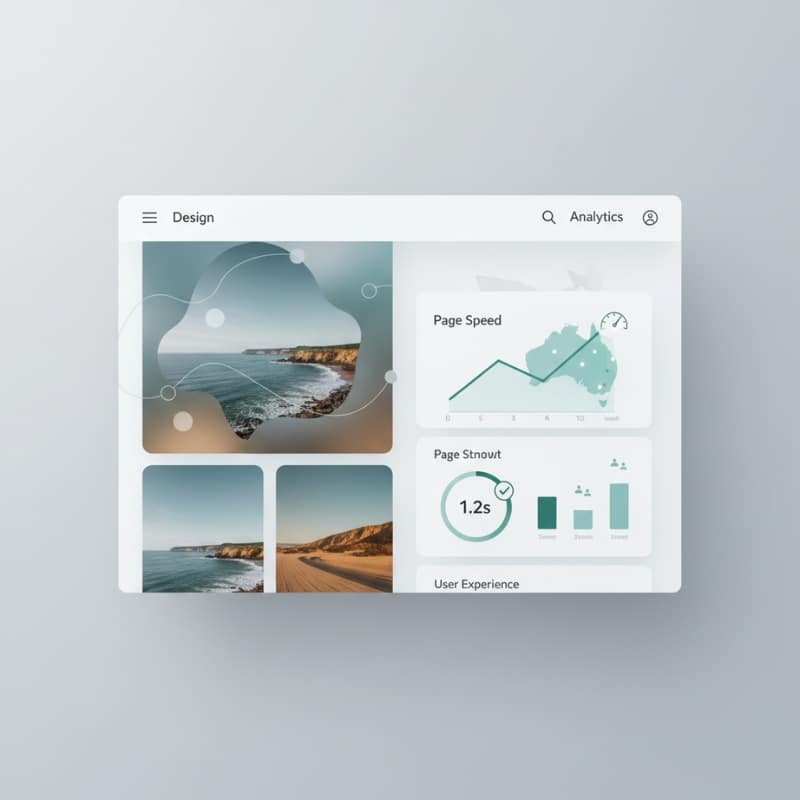
At first glance, a beautifully designed website feels like a win.
Sleek visuals, bold branding, smooth animations, and modern layouts often give business owners confidence that their online presence is doing its job. But for many Australian businesses, that confidence is misplaced.
Behind the scenes, countless visually impressive websites are quietly underperforming — not because they look bad, but because they were built without performance, usability, and search visibility in mind. This is one of the most common (and expensive) SEO mistakes businesses make.
In today’s search environment, Google doesn’t reward aesthetics alone. It rewards speed, usability, relevance, and performance. When a website is built primarily for looks, SEO often pays the price.
Why Design-First Websites Struggle to Rank on Google
Search engines have evolved far beyond judging websites on appearance. Google’s algorithms now assess how real users interact with your site.
That includes:
• How quickly pages load
• How stable the layout feels
• How easy it is to navigate
• Whether content satisfies search intent
• How well the site performs on mobile
A website can look stunning and still fail across all of these areas.
Google Optimises for Experience, Not Appearance
Google’s ranking systems analyse real behavioural data:
• Bounce rates
• Time on page
• Scroll depth
• Click behaviour
• Mobile usability
When users land on a site that looks great but loads slowly, feels clunky, or is hard to use, they leave. Those signals tell Google that the page did not meet expectations — and rankings decline as a result.
The Hidden Performance Issues Designers Often Overlook
Most designers aren’t trying to harm SEO. The problem is that design decisions are often made without understanding how they affect performance.
Heavy Visual Assets That Kill Page Speed
Large images, background videos, sliders, and animations may enhance aesthetics, but they frequently:
• Increase load times
• Hurt Core Web Vitals scores
• Slow mobile performance
• Create friction for users on slower connections
Page speed is a confirmed Google ranking factor. If your site takes too long to load, users abandon it — and Google notices.
“Responsive” Design That Still Fails on Mobile
A site can technically be responsive and still deliver a poor mobile experience.
Common mobile issues include:
• Small buttons that are hard to tap
• Overlapping content
• Slow-loading elements
• Text that’s difficult to read
• Interactive features that don’t work properly
With mobile-first indexing, Google primarily evaluates the mobile version of your site. If mobile usability suffers, SEO performance follows.
UX and SEO Are Now Completely Linked
User experience is no longer separate from SEO — it’s a core ranking consideration.
Poor UX Sends Negative SEO Signals
When users struggle to find what they need, SEO suffers through:
• Higher bounce rates
• Lower engagement
• Reduced dwell time
• Missed conversions
These behavioural signals tell search engines that your content isn’t satisfying user intent.
Navigation That Confuses Users and Search Engines
Design-led navigation often looks impressive but creates problems, such as:
• Hidden service pages
• Vague menu labels
• JavaScript-heavy navigation
• Crawlability issues
Clear structure helps both users and search engines understand your site, improving rankings and usability at the same time.
Core Web Vitals — The Silent SEO Scorecard
Google uses Core Web Vitals to measure how real users experience your website.
The Metrics That Matter Most
• Largest Contentful Paint (LCP): How fast the main content loads
• Interaction to Next Paint (INP): How responsive the site feels
• Cumulative Layout Shift (CLS): How stable the page layout is
Many design elements directly impact these scores. Pop-ups, sliders, lazy-loaded images, and animations often cause performance issues that aren’t immediately obvious to non-technical teams.
When a Beautiful Website Fails to Convert
SEO success isn’t just about rankings — it’s about results.
Design That Ignores Search Intent
Many visually impressive websites:
• Hide calls to action
• Prioritise style over clarity
• Confuse users about next steps
• Fail to align content with why users searched
Traffic without conversions is wasted opportunity. That’s why businesses that invest in professional SEO services in Australia see better long-term outcomes — SEO connects traffic, intent, and conversion.
Why This Problem Is Common in Australia
Australian businesses operate in highly competitive digital markets, especially in major cities and service-based industries.
High Expectations, Low Patience
Australian users expect:
• Fast-loading websites
• Clear messaging
• Easy navigation
• Seamless mobile experiences
If your site doesn’t deliver, users leave quickly — often straight to a competitor.
Local SEO Takes a Hit Too
Design-heavy websites frequently:
• Bury location signals
• Underuse local keywords
• Miss structured data opportunities
• Fail to optimise service pages properly
This weakens visibility for local and national search results alike.
How to Fix a Design-First Website Without Rebuilding It
The good news is that most websites don’t need to be scrapped — they need strategic optimisation.
Start With an SEO and Performance Audit
A proper audit reveals:
• Speed bottlenecks
• UX friction points
• Technical SEO errors
• Content gaps
• Conversion blockers
This is often where businesses finally learn more about SEO requirements that were never considered during the design phase.
Align Design, UX, and SEO Strategy
High-performing websites balance:
• Clean, purposeful design
• Fast, stable performance
• Clear user journeys
• Search-aligned content
This integrated approach is the foundation of comprehensive SEO solutions for Australian businesses that deliver both visibility and revenue.
Performance, SEO, and Government Best Practice
Website performance isn’t just an SEO issue — it’s recognised as a core business requirement.
The Australian Government highlights the importance of usability, accessibility, and performance for business websites, reinforcing that strong digital foundations are critical for trust, engagement, and growth, as outlined by business.gov.au.
Why SEO Expertise Matters More Than Ever
Designers focus on aesthetics. Developers focus on functionality. SEO specialists focus on visibility, performance, and outcomes.
An experienced SEO agency ensures:
• Design choices support rankings
• Performance meets Google’s standards
• Content satisfies search intent
• UX supports conversions
• Your site adapts to algorithm and AI search changes
This is what separates websites that merely look good from websites that actually perform.
Final Thoughts — Looks Without Performance Cost You Money
A visually impressive website that doesn’t perform is more than ineffective — it’s a liability.
Modern SEO in Australia demands:
• Speed
• Usability
• Technical excellence
• Intent-focused content
• Conversion optimisation
When performance leads and design supports it, rankings, traffic, and enquiries follow.
If your website looks great but isn’t delivering results, the issue isn’t your market or competition.
It’s the hidden SEO killer built into the site itself.